Amovera vs Ballista
Side-by-side comparison to help you choose the right product.

Amovera
All-in-one wedding planner. No hidden fees.

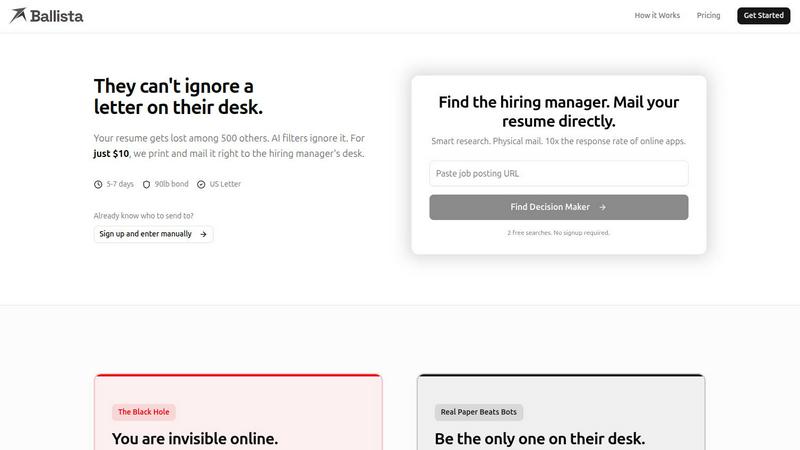
Ballista sends your resume directly to hiring managers, bypassing filters to ensure you get noticed for jobs in the US.
Last updated: February 28, 2026
Visual Comparison
Amovera

Ballista
Overview
About Amovera
Amovera is a wedding planning tool that keeps everything in one place. Guest list and RSVP management, seating chart builder, budget tracker, moodboard, vendor contacts and task lists, all without switching between apps or spreadsheets.
It works for two people at the same time, so both partners can plan together without stepping on each other's toes.
Most free wedding tools make money by selling your data to vendors. Amovera does not. You pay once and get lifetime access with no subscriptions, no upsells and no spam from caterers.
Available in English and German, building more languages soon.
One payment. Lifetime access. 60-day money-back guarantee.
About Ballista
Ballista is a groundbreaking solution specifically designed for job seekers who are frustrated with the inefficacies of online job applications. It tackles the prevalent issue of the "black hole" phenomenon, where resumes are often overlooked by automated systems and buried among numerous competitors. Ballista operates on a straightforward yet powerful principle: physical mail garners attention. The platform allows users to bypass automated filters by identifying the relevant hiring managers, professionally printing resumes on premium paper, and mailing them directly to the decision-makers' desks. This tangible method showcases initiative, ensuring that your application is seen by the right person. Catering to a diverse audience—from recent graduates to seasoned professionals—Ballista transforms the generic online application process into a personalized and memorable outreach campaign. With pricing starting as low as $5 per application and a remarkable 90% open rate for physical mail, users can expect response rates up to ten times higher than traditional online methods.