AskFormulas vs Miget
Side-by-side comparison to help you choose the right product.

AskFormulas
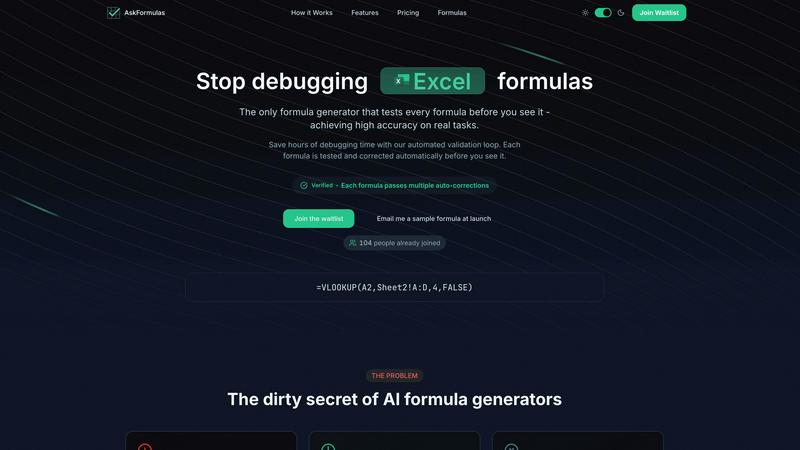
AskFormulas instantly generates and validates Excel and Google Sheets formulas, saving you time and eliminating errors.
Last updated: February 28, 2026

Miget
Deploy unlimited services on one flat-rate plan.
Visual Comparison
AskFormulas
Miget
Overview
About AskFormulas
AskFormulas is a groundbreaking AI-powered tool that transforms the way users interact with spreadsheets by eliminating the common frustrations associated with broken formulas. Designed specifically for individuals and teams who frequently rely on Excel and Google Sheets, AskFormulas addresses the critical flaw found in many existing AI formula generators, which have error rates ranging from 40% to 60%. The core of AskFormulas is its unique automated validation system that ensures every formula is tested against real data before being presented to the user. This meticulous process not only corrects common errors, such as #REF! and #VALUE!, but guarantees a remarkable accuracy rate of over 95%. Whether you are a financial analyst constructing complex models, a revenue manager automating reports, or a small business owner with limited Excel expertise, AskFormulas empowers you to stop being a beta tester for flawed AI solutions. Instead, you can confidently paste verified formulas into your spreadsheet, saving you countless hours of debugging and enhancing your overall productivity.
About Miget
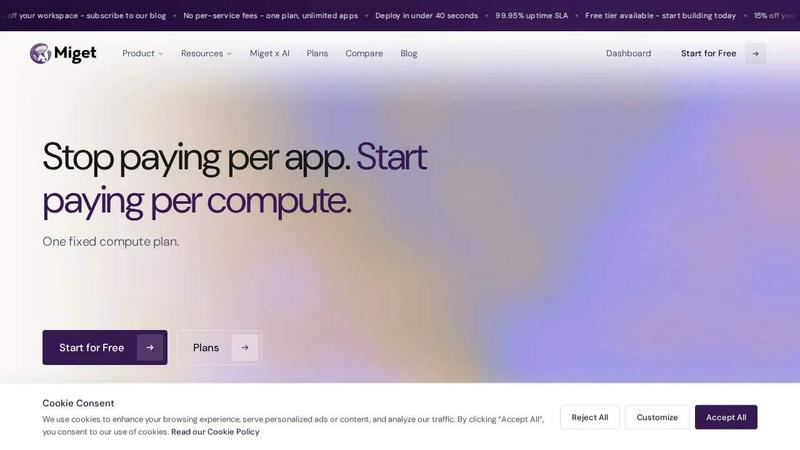
Miget – Stop paying per app. Start paying per compute.
Traditional PaaS platforms charge you for every app, database, and worker separately. Miget flips that model: pick a fixed compute plan, then deploy as many services as you want inside it.
- Unlimited apps, databases, and background workers per plan
- No per-service billing surprises
- Built on Kubernetes with full isolation between tenants
- Deploy from Git, GitHub, Registry with zero-config builds
- Managed PostgreSQL, Redis, and more
- Custom domains with automatic TLS
Whether you're running a single side project or a full production stack, you only pay for the compute you reserve—not the number of things you run on it.