CloudBurn vs Perkoon
Side-by-side comparison to help you choose the right product.

CloudBurn
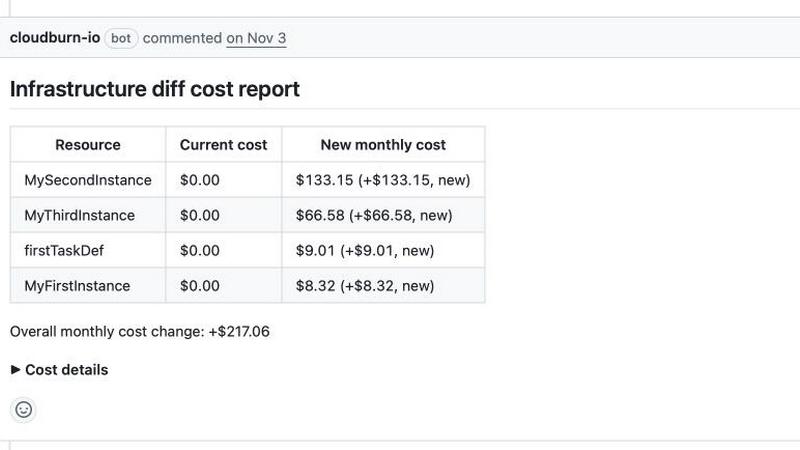
CloudBurn shows AWS cost estimates in pull requests to prevent costly mistakes before deployment.
Last updated: February 28, 2026

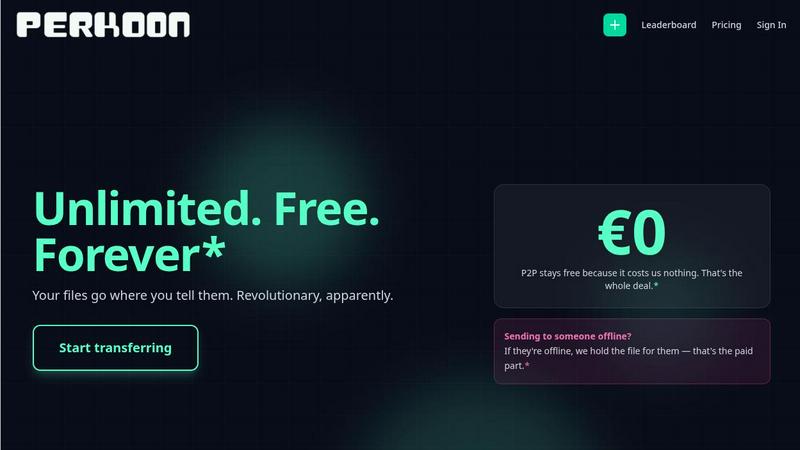
Send files directly to anyone for free with unlimited peer-to-peer transfers.
Last updated: March 4, 2026
Visual Comparison
CloudBurn
Perkoon
Feature Comparison
CloudBurn
Automated Pull Request Cost Analysis
CloudBurn seamlessly integrates with your GitHub workflow to provide automated cost analysis on every pull request. Once configured, it automatically detects infrastructure changes from tools like AWS CDK Diff or Terraform Plan, calculates the precise monthly cost impact, and posts a detailed, easy-to-read report directly in the PR conversation. This eliminates manual estimation and ensures cost awareness is a natural part of every code review cycle without requiring extra steps from developers.
Real-Time AWS Pricing Data
The platform uses always up-to-date, real-time AWS pricing data to generate its estimates. This ensures that the cost reports reflect the actual current prices for services, instance types, storage, and data transfer in your specific region. You can trust that the dollar figures you see are accurate and not based on outdated spreadsheets or static price lists, which is critical for making reliable financial decisions about your architecture.
Detailed Line-Item Cost Breakdown
Beyond a simple total, CloudBurn provides a granular, line-item breakdown of costs for each new or modified resource. The report shows the current cost, the new projected monthly cost, and the delta for every resource. It also includes details like hourly rates, AWS usage types, and service descriptions, giving developers and reviewers full transparency into what is driving the cost change and where optimizations can be made.
Secure GitHub-Centric Integration
Security and simplicity are paramount. CloudBurn's setup, billing, and permissions are handled 100% through GitHub. You install it via the GitHub Marketplace, and it operates using standard GitHub Actions. This means no separate dashboard logins, no need to share AWS credentials directly with a third party, and a setup that aligns perfectly with developer-centric, GitOps-based workflows, ensuring a secure and frictionless adoption.
Perkoon
Truly Free Peer-to-Peer (P2P) Transfers
Perkoon's core feature is its unlimited, free P2P file transfer. When both sender and recipient are online, files are beamed directly from one browser to another without ever passing through Perkoon's servers. This means there are no file size limits, no mandatory sign-ups, and absolute privacy for your data. Because this method costs Perkoon virtually nothing to facilitate, they can offer it as a free service forever, with no hidden catches or data monetization.
Honest Encrypted Cloud Storage
For sending files to someone who is offline, Perkoon provides encrypted cloud storage as a paid feature. This approach is transparent: the free P2P model covers online transfers, while the paid cloud storage honestly covers the cost of running and maintaining secure servers. Your files are encrypted on their servers, providing a secure holding area until your recipient is ready to download, without pretense of it being free.
Native AI and Automation Integration
Perkoon is designed for the modern workflow by offering built-in tools for automation and AI agents. Through features like window.__perkoon, AI assistants and scripts can interact with the service programmatically without resorting to inefficient screen-scraping techniques. This makes it possible to integrate file sending and receiving into automated pipelines, agentic workflows, and custom tools seamlessly.
Simple CLI and Browser Tools
Beyond the web interface, Perkoon offers a Command Line Interface (CLI) tool, providing power users and developers with a fast, scriptable way to transfer files. The web service itself works optimally on modern browsers like Chrome, Edge, and Brave, with clear communication about any limitations on Firefox and Safari, ensuring a reliable experience across platforms.
Use Cases
CloudBurn
Preventing Costly Misconfigurations in PR Reviews
The primary use case is catching expensive mistakes during code review. For example, a developer might accidentally change an instance type from t3.micro to t3.xlarge or provision an unencrypted, publicly accessible S3 bucket with excessive storage. CloudBurn will flag the significant cost increase or high-risk resource immediately in the PR, allowing the team to question and correct the configuration before it merges, preventing a surprise bill.
Enabling Data-Driven Architecture Decisions
Teams can use CloudBurn to compare the cost implications of different architectural approaches directly in their feature branches. When debating between using AWS Fargate versus EC2 instances, or choosing a database instance size, developers can create PRs for each option. CloudBurn's cost reports provide concrete financial data to inform these decisions, helping teams balance performance, scalability, and cost from the outset.
Establishing Team-Wide Cost Accountability
CloudBurn fosters a culture of financial responsibility (FinOps) within engineering teams. By making cost impact visible to every contributor and reviewer, it encourages developers to consider cost as a non-functional requirement. This shared visibility ensures that cost optimization is a collective effort, not just a task for a separate FinOps team, leading to more sustainable infrastructure spending.
Streamlining Compliance and Budget Governance
Platform engineering and leadership teams can use CloudBurn to enforce soft budget guards. By requiring cost review on all infrastructure PRs, they can ensure that no single change exceeds a certain cost threshold without explicit approval. This creates an automated governance layer that helps keep projects within budget and aligns infrastructure spending with business objectives without heavy-handed manual processes.
Perkoon
Sending Large Project Files to Clients
Freelancers and agencies can use Perkoon's free P2P transfer to send large video edits, design mockups, or code repositories to clients instantly. There's no need to compress files or upgrade to a "pro" plan just to bypass a size limit. If the client is unavailable, the secure cloud hold ensures the file waits for them.
Private Document Exchange
For lawyers, journalists, or anyone handling sensitive information, Perkoon's P2P mode is ideal. Since files travel directly between browsers and are never stored on an intermediary server, it provides a much higher degree of privacy and security for confidential documents compared to traditional cloud transfer services.
Automating Backup and Sync Tasks
Developers and IT professionals can leverage Perkoon's CLI and native automation APIs to build custom scripts. For example, you can automatically back up log files to a colleague's machine or sync generated reports directly from a server process to a team storage bucket, all without manual intervention.
AI Agent File Operations
When an AI agent needs to send a generated image, document, or dataset to a user, it can use Perkoon's built-in window.__perkoon interface directly. This allows AI assistants to perform file transfer tasks reliably as part of a larger automated workflow, instead of struggling with simulated clicks on a website designed for humans.
Overview
About CloudBurn
CloudBurn is a proactive FinOps and cost intelligence platform designed for engineering teams using Infrastructure-as-Code (IaC) tools like Terraform and AWS CDK. It directly tackles the pervasive problem of unexpected and spiraling AWS bills by integrating cost visibility into the developer workflow. The tool is built for developers, platform engineers, and DevOps teams who want to shift cost governance left, catching expensive infrastructure misconfigurations during code review—before they are ever deployed to production. By automatically analyzing pull requests, CloudBurn provides real-time, line-item AWS cost estimates for proposed changes, posting a clear report as a comment. This transforms cost from a retrospective, finance-team concern into a real-time, actionable metric for engineers. Its core value proposition is preventing financial waste by enabling informed architectural decisions early, fostering a culture of cost accountability, and delivering an immediate return on investment by avoiding costly mistakes that traditionally only surface weeks later on an invoice.
About Perkoon
Perkoon is a file transfer service designed to solve the core problem of moving files from one point to another without the typical friction, privacy invasions, and hidden costs. It is built for individuals, freelancers, and teams who are tired of artificial file size limits, mandatory account creation, and services that monetize user data. Perkoon's main value proposition is its refreshingly honest and technically elegant two-mode system. Its flagship offering is a completely free, unlimited peer-to-peer (P2P) transfer service that works directly between browsers when both parties are online, ensuring privacy and eliminating operational costs. For situations where the recipient is offline, Perkoon offers a straightforward paid cloud storage option, transparently priced to cover server costs. Uniquely, Perkoon is natively built for automation, featuring tools that allow AI agents and scripts to interact with the service directly, making it a future-proof solution for both people and the machines that assist them.
Frequently Asked Questions
CloudBurn FAQ
How does CloudBurn calculate the cost estimates?
CloudBurn calculates costs by analyzing the output of your Infrastructure-as-Code tool's diff command (like cdk diff or terraform plan). It identifies the specific AWS resources being added, modified, or removed. Then, it cross-references these resources with real-time AWS pricing data for your configured region, applying standard assumptions for monthly usage (730 hours) to generate a projected monthly cost. The result is a detailed report showing the impact per resource and in total.
Is my code or AWS access secure with CloudBurn?
Yes, security is a core design principle. CloudBurn does not require direct access to your AWS accounts. All analysis is performed based on the plan/diff output generated securely within your own GitHub Actions workflow. Billing and permissions are managed entirely through GitHub, so there are no separate credentials to manage. The tool follows the principle of least privilege and is verified by GitHub.
What IaC tools and cloud providers does CloudBurn support?
Currently, CloudBurn specializes in supporting AWS cloud infrastructure. It natively integrates with the two most popular IaC frameworks for AWS: HashiCorp Terraform and the AWS Cloud Development Kit (AWS CDK). The setup involves adding the corresponding GitHub Action (Terraform Plan PR Commenter or AWS CDK Diff PR Commenter) to your repository's workflow.
Can I use CloudBurn for free?
Yes, CloudBurn offers a free Community plan that you can use forever. They also provide a 14-day trial of their Pro features, which include more advanced reporting and capabilities, with no credit card required to start. You can begin using the core pull request cost analysis functionality at no cost to evaluate its value for your team.
Perkoon FAQ
Do you store my files?
For P2P transfers, your files never touch our servers; they go directly from the sender's browser to the recipient's. For cloud transfers (used when the recipient is offline), files are encrypted and stored temporarily on our servers to facilitate the delivery. We are transparent that this is the part of the service that incurs a cost.
Can Perkoon see what I'm sending in a P2P transfer?
No. In a P2P transfer, the data stream is established directly between the two browsers involved. Our servers only help set up the connection but cannot intercept or see the actual file data being transferred. We literally cannot see what you are sending.
Why is the P2P transfer free forever?
The P2P technology we use allows browsers to connect directly to each other. This process costs us very little in terms of server resources and bandwidth. Therefore, we can offer it for free indefinitely. We only charge for the cloud storage feature, which genuinely requires us to maintain and pay for server infrastructure.
What if the other person is offline?
If your recipient is not online to receive the direct P2P transfer, Perkoon offers an encrypted cloud storage option. You can upload the file to our secure servers, and we will hold it for your recipient to download at their convenience. This is a paid feature, and details can be found on our pricing page.
Alternatives
CloudBurn Alternatives
CloudBurn is a specialized tool in the development and DevOps category, designed to provide automatic AWS cost estimates directly within pull requests. It helps teams using Terraform or AWS CDK prevent expensive infrastructure errors before they are deployed, promoting financial accountability from the start of the development cycle. Users may explore alternatives for various reasons, such as budget constraints, the need for support across multiple cloud providers, or a requirement for different integration points beyond GitHub. Some teams might seek more comprehensive FinOps platforms or simpler, standalone cost calculators that fit their specific workflow. When evaluating an alternative, key considerations include the accuracy of its cost estimation engine, its integration capabilities with your existing CI/CD and version control systems, and the depth of reporting it offers. The ideal solution should seamlessly fit into your development process, providing clear, actionable cost data without creating significant overhead for your engineering team.
Perkoon Alternatives
Perkoon is a straightforward file transfer service in the productivity and management category, designed to move files directly and privately between users. People often look for alternatives to any tool for various reasons, such as needing different pricing models, specific features like advanced collaboration, or compatibility with certain platforms and workflows. When evaluating other options, it's wise to consider your core needs. Key factors include the method of transfer, such as direct peer-to-peer versus cloud storage, the presence of file size or bandwidth limits, and the overall philosophy regarding user privacy and data handling. The ideal service aligns with your technical requirements and comfort level.