fnel vs Fusedash
Side-by-side comparison to help you choose the right product.

Fnel gives solo founders real-time funnel analytics to fix conversion leaks fast.
Last updated: March 1, 2026

Fusedash turns raw data into clear dashboards so your team can act on insights instantly.
Last updated: March 4, 2026
Visual Comparison
fnel
Fusedash
Feature Comparison
fnel
Real-Time Funnel Visualization
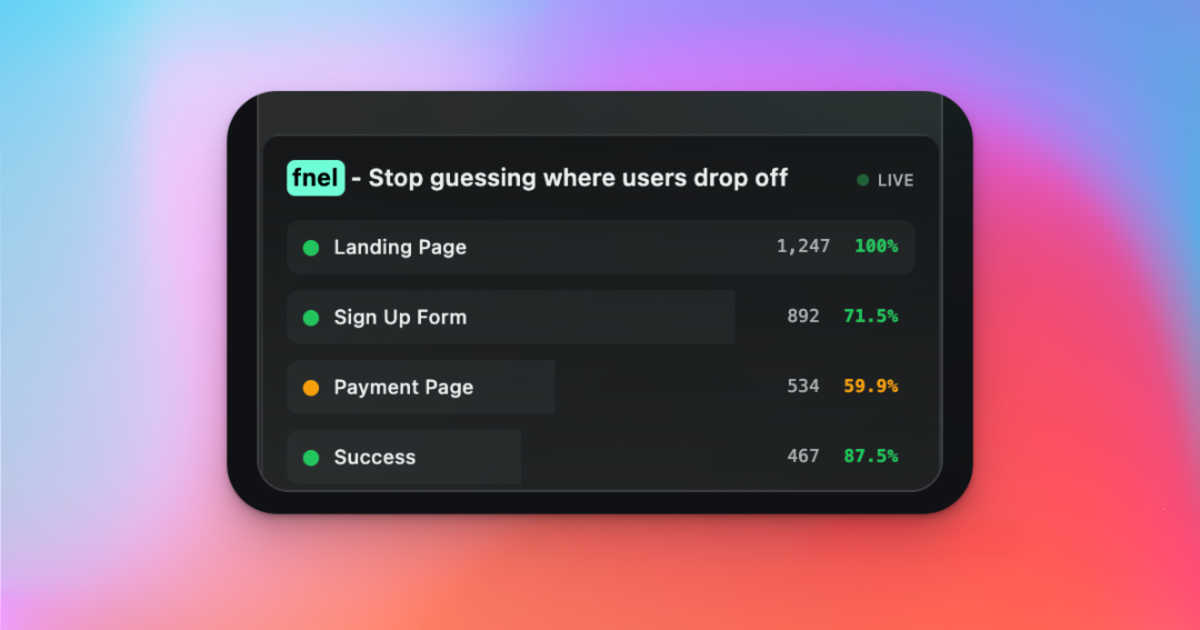
fnel provides an instant, visual dashboard that maps your user's journey step-by-step. You can see exactly how many users progress from one stage to the next, such as from landing page view to signup form submission to payment completion. The interface displays conversion rates and user counts at each step in real-time, eliminating the lag and guesswork. This immediate feedback loop allows you to monitor the impact of changes as you make them, turning analytics from a retrospective report into an active optimization tool.
Smart Drop-Off Alerts
The platform automatically monitors your funnel steps and detects anomalies. If a particular step, like a payment page, suddenly starts underperforming with a higher-than-usual drop-off rate, fnel will trigger an alert. This proactive notification means you don't have to constantly watch the dashboard. You're immediately informed of potential problems—such as a broken form or a confusing UI element—enabling you to investigate and fix conversion leaks faster than ever before.
A/B Test Validation at the Funnel Level
fnel allows you to attribute events to specific A/B test variants, enabling step-level conversion analysis. Instead of just looking at overall click-through rates, you can see which variant of a pricing page or CTA button leads to more users actually completing the subsequent signup or purchase steps. This provides much deeper validation than vanity metrics, giving you clear, funnel-based evidence on what truly drives users toward your final conversion goal.
One-Line Code Setup & Developer-Friendly Design
Integration is designed for maximum speed and minimal friction. After installing the fnel package, you simply initialize the library with your API key using one line of code. From there, you can start tracking events immediately. There's no complex configuration, no need to define schemas upfront, and no overwhelming admin panels. This simplicity ensures developers and founders can implement robust analytics in under five minutes and return to building their product.
Fusedash
Unified AI Visualization Workspace
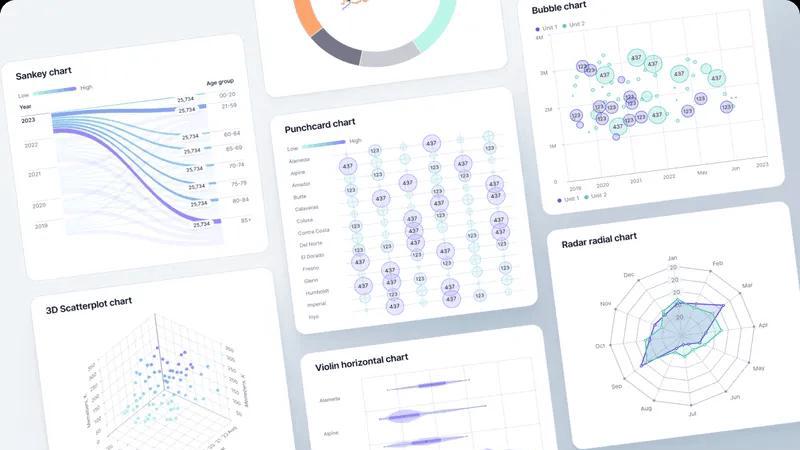
Fusedash consolidates multiple data presentation needs into one platform. Instead of juggling separate tools for dashboards, charts, maps, and reports, teams can build all these views from a single connected dataset. This unified approach eliminates redundant work, ensures metric consistency, and allows you to switch between an interactive dashboard for real-time monitoring and a narrative report for stakeholder updates without duplicating effort or logic.
AI Chart Generator
This feature accelerates the initial step of data exploration and reporting. Users can upload a CSV or connect an API, and Fusedash's AI will quickly suggest and generate the most appropriate charts to visualize the dataset. It helps in picking the right chart type, applying comparisons, and refining labels to accurately tell the data's story. These charts can be used as standalone visuals or seamlessly dropped into larger dashboards and reports.
Smart Data Chat
Designed to make data exploration intuitive, the Smart Chat feature allows users to ask questions about their data in plain language. You can query for specific metrics, request breakdowns by segment or region, and get AI-suggested visualizations. The insights generated through this conversational interface can then be instantly turned into shareable, persistent views within a dashboard, making advanced analysis accessible to everyone.
Flexible, Audience-Specific Views
Fusedash understands that different teams need different lenses on the same data. This feature allows you to customize how data is presented for each audience. From a high-level executive dashboard to a detailed operational map or a marketing report with storytelling context, you can build the right view by customizing layouts, filters, and time ranges—all while reusing the same underlying data definitions to maintain absolute consistency.
Use Cases
fnel
Optimizing SaaS User Onboarding
For SaaS founders, the journey from signup to activated user is critical. fnel can track steps like landing page visit, account creation, email verification, initial onboarding tutorial, and first key action completion. By visualizing this funnel, you can pinpoint where new users get confused or disengaged. For instance, a major drop-off after email verification might indicate a problem with the verification email itself or the next step's clarity, allowing you to streamline the path to activation.
Fixing E-commerce Checkout Leaks
E-commerce store owners can use fnel to map the checkout process: cart view, shipping information entry, payment details submission, and order confirmation. Seeing the conversion percentage at each stage reveals where customers abandon their carts. A significant drop at the payment page could signal issues with payment gateway reliability, unexpected fees, or a lack of trusted payment badges, enabling targeted fixes to recover lost sales.
Validating Marketing Campaigns for Agencies
Marketing agencies and consultants running lead generation campaigns can prove their ROI by tracking a client's lead funnel. Steps can include form submission on a landing page, lead qualification, and scheduled discovery call. By connecting this funnel data to specific campaign sources (using UTM parameters or event properties), agencies can demonstrate exactly which campaigns generate not just clicks, but qualified leads that move through the entire sales pipeline.
Tracking Side Project or MVP Validation
Indie hackers and builders launching a new product idea need to validate interest quickly. fnel is perfect for tracking a simple, crucial funnel for an MVP, such as "Visitor -> Waitlist Signup -> Beta Access Granted." This provides immediate, clear data on conversion rates from traffic to committed interest, helping decide whether to pivot or persevere without investing in complex analytics infrastructure prematurely.
Fusedash
Streamlining Executive Reporting
Leadership teams need a consistent, high-level view of company KPIs without getting bogged down in data discrepancies. Fusedash solves this by allowing executives to access a single dashboard that combines real-time metrics with narrative storytelling sections. This provides clear context on what changed, why it matters, and what the next steps are, replacing fragmented slide decks and ensuring all leaders are aligned on a single source of truth.
Empowering Marketing Performance Analysis
Marketing teams can connect multiple data sources (e.g., ad platforms, web analytics, CRM) into Fusedash. They can define core campaign metrics once and then build various views: real-time dashboards for daily monitoring, AI-generated charts for performance deep-dives, and segmented reports for channel-specific analysis. This eliminates manual data stitching and allows marketers to quickly identify trends and optimize spend.
Operational and Geographic Monitoring
For operations, logistics, or sales teams managing field activities, Fusedash's mapping capabilities are crucial. They can visualize performance or incident data geographically on detailed maps. By combining this with dashboard filters and drill-downs, teams can monitor real-time operations across regions, identify hotspots, and understand local drivers of performance, all within the same platform used for other reporting.
Consolidating Cross-Departmental Reporting
Organizations tired of reconciling numbers from finance, sales, and product can use Fusedash as a central reporting hub. Each department can build its own tailored views—charts for analysis, dashboards for monitoring, reports for planning—from a centrally managed and consistently defined dataset. This breaks down data silos, reduces inter-departmental conflicts over numbers, and accelerates planning cycles.
Overview
About fnel
fnel is a funnel analytics tool engineered for the unique needs of solo founders, indie hackers, and early-stage startups. It solves a critical, time-sensitive problem: identifying exactly where potential customers abandon your conversion process. Traditional analytics platforms like Google Analytics or Mixpanel are powerful but notoriously complex, requiring extensive setup, schema definitions, and sifting through overwhelming dashboards to find actionable insights. fnel cuts through this noise by focusing exclusively on funnel visualization and drop-off analysis. With just a single line of code to initialize, you can start sending event data and immediately see a real-time visualization of your user journey. This streamlined, developer-friendly approach means you spend minutes, not days, on setup. The core value proposition is clarity and speed—providing immediate, understandable insights that empower you to fix conversion leaks, optimize signup flows, improve onboarding, and validate new features or marketing campaigns. Whether you're bootstrapping a side project, launching an MVP, or scaling your first SaaS, fnel delivers the essential data you need to make swift, confident, and data-driven decisions without the burden of a full-scale analytics suite.
About Fusedash
Fusedash is an AI-powered data visualization platform designed to eliminate the chaos of disconnected data tools and manual reporting. It provides a unified workspace where teams can transform raw data from CSVs, APIs, and databases into clear, actionable insights. The platform consolidates the entire reporting workflow, enabling users to build interactive dashboards, generate AI-powered charts, create detailed maps, and craft narrative reports all from a single, consistent dataset. This is built for teams across leadership, marketing, operations, and sales who are frustrated by time-consuming report cycles, conflicting data stories, and the inefficiency of rebuilding the same logic across multiple tools. Fusedash's core value proposition is consistency and efficiency: you define your key metrics and KPIs once, and then reuse those trusted definitions across every view and report. This ensures everyone in the organization is aligned on the same numbers. With integrated AI features like natural language data chat and smart visualization assistance, Fusedash makes data exploration accessible to all skill levels, empowering teams to not only monitor real-time performance but also understand the "why" behind the numbers through deep drill-downs. Ultimately, it turns data into a shared source of truth that drives confident decision-making and unified action.
Frequently Asked Questions
fnel FAQ
How is fnel different from Google Analytics or Mixpanel?
fnel is purpose-built exclusively for funnel analysis and speed, while tools like GA and Mixpanel are broad, general-purpose analytics platforms. fnel requires just one line of code to start, provides step-level insights and automatic drop-off detection out of the box, and presents data in a simple, focused dashboard. There's no need to configure complex events, schemas, or reports, saving founders days of setup time and eliminating dashboard noise.
Is there a free plan to get started?
Yes, fnel offers a Free Starter plan that requires no credit card. It includes up to 5,000 events per month, tracking for up to 3 funnels, access to the real-time dashboard, and basic drop-off analysis. This plan is designed to let you fully validate your funnel and the tool's value before any financial commitment.
What happens if I exceed my monthly event limit?
On the Free plan, if you exceed 5,000 events in a month, tracking will pause until the next billing cycle begins or until you upgrade to a paid plan. The Pro plan includes 100,000 events per month. fnel will notify you as you approach your limit so you can manage your usage or upgrade seamlessly without losing data.
Can I export my funnel data for further analysis?
Data export capabilities are available on the Pro plan and Lifetime plan. You can export your funnel event data in common formats like CSV and JSON. This allows you to perform deeper analysis in spreadsheets, combine it with other data sources, or create custom reports for stakeholders or investors.
Fusedash FAQ
What types of data sources can I connect to Fusedash?
Fusedash is built for flexibility in data ingestion. You can start by uploading CSV or Excel files directly. For live data, you can connect to various APIs from business tools, marketing platforms, and databases. The platform is designed to combine these datasets into a single unified view, allowing you to enrich internal data with public datasets for additional context, such as geographic or market information.
How does Fusedash ensure data consistency across reports?
Consistency is a core principle of Fusedash. You define your key metrics, dimensions, and calculation logic (like time comparisons or segments) centrally in the platform. Once defined, these "single sources of truth" are reused across every dashboard, chart, map, and report you create. This means that whether the CEO is looking at a dashboard or a manager is using a chart in a presentation, they are all referencing the exact same calculation.
Do I need coding or data science skills to use Fusedash?
No, Fusedash is designed to be accessible for users of all technical skill levels. The interface allows for drag-and-drop dashboard building and intuitive filtering. The AI-powered features, like the Smart Data Chat and Chart Generator, are specifically built to guide non-technical users. You can ask questions in plain language and get suggested visualizations, making advanced data exploration possible without writing a single query.
Can I share the dashboards and reports I create with external stakeholders?
Yes, Fusedash includes robust sharing capabilities. You can share interactive dashboards, static reports, or specific charts with both internal team members and external stakeholders like clients or partners. Access can be controlled, and views can be customized with filters so each audience sees the most relevant information without being overwhelmed by unnecessary data.
Alternatives
fnel Alternatives
Fnel is a real-time funnel analytics tool designed for solo founders and early-stage startups. It simplifies tracking user drop-offs in conversion funnels with a minimal one-line code setup, providing clear, actionable insights without the complexity of larger platforms. Users often explore alternatives for various reasons. These can include budget constraints, the need for more advanced features like cohort analysis or deeper user segmentation, or a requirement for integration with a broader marketing or product analytics suite. As a project grows, its data needs can evolve beyond a focused tool. When evaluating other options, consider your primary goal. Look for ease of implementation, clarity of insights, and whether the tool scales with your needs. The right solution should solve your immediate funnel analysis problem without creating new complexities, allowing you to stay focused on improving conversions.
Fusedash Alternatives
Fusedash is an AI-powered business intelligence and data visualization platform. It helps teams unify their data sources to create consistent, interactive dashboards and reports, turning complex information into a shared source of truth for better decision-making. Users often explore alternatives for various reasons. These can include budget constraints, the need for specific integrations with their existing tech stack, or requirements for more advanced features like custom data modeling or on-premise deployment. The search for the right tool is highly dependent on a team's unique data maturity and workflow. When evaluating other platforms, key considerations should include the ease of connecting to your data sources, the ability to maintain consistent metric definitions, the collaboration features for your team, and the overall total cost of ownership. The goal is to find a solution that reduces manual reporting work and eliminates data conflicts.