Fusedash vs SERPView
Side-by-side comparison to help you choose the right product.

Fusedash turns raw data into clear dashboards so your team can act on insights instantly.
Last updated: March 4, 2026

SERPView
SERPView unlocks hidden Google Search Console data for deeper SEO insights and performance tracking.
Last updated: March 1, 2026
Visual Comparison
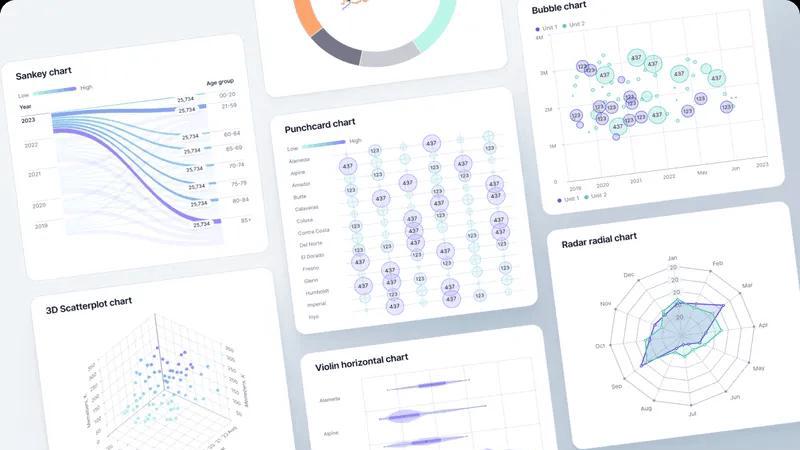
Fusedash
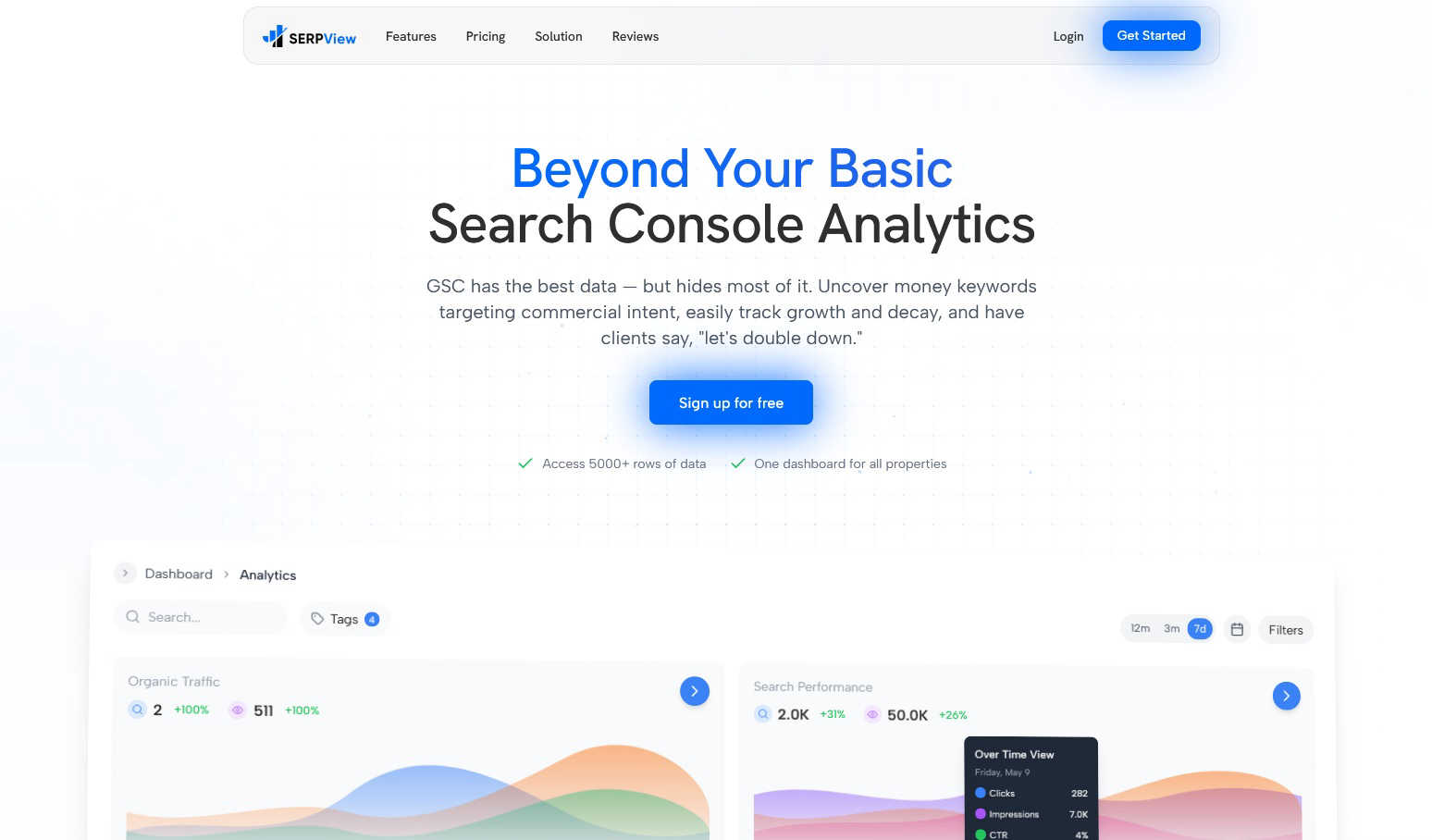
SERPView
Feature Comparison
Fusedash
Unified AI Visualization Workspace
Fusedash consolidates multiple data presentation needs into one platform. Instead of juggling separate tools for dashboards, charts, maps, and reports, teams can build all these views from a single connected dataset. This unified approach eliminates redundant work, ensures metric consistency, and allows you to switch between an interactive dashboard for real-time monitoring and a narrative report for stakeholder updates without duplicating effort or logic.
AI Chart Generator
This feature accelerates the initial step of data exploration and reporting. Users can upload a CSV or connect an API, and Fusedash's AI will quickly suggest and generate the most appropriate charts to visualize the dataset. It helps in picking the right chart type, applying comparisons, and refining labels to accurately tell the data's story. These charts can be used as standalone visuals or seamlessly dropped into larger dashboards and reports.
Smart Data Chat
Designed to make data exploration intuitive, the Smart Chat feature allows users to ask questions about their data in plain language. You can query for specific metrics, request breakdowns by segment or region, and get AI-suggested visualizations. The insights generated through this conversational interface can then be instantly turned into shareable, persistent views within a dashboard, making advanced analysis accessible to everyone.
Flexible, Audience-Specific Views
Fusedash understands that different teams need different lenses on the same data. This feature allows you to customize how data is presented for each audience. From a high-level executive dashboard to a detailed operational map or a marketing report with storytelling context, you can build the right view by customizing layouts, filters, and time ranges—all while reusing the same underlying data definitions to maintain absolute consistency.
SERPView
Performance Tracking Beyond Limits
Access up to 50,000 rows of GSC data, shattering the native 1,000-row limit. This allows for comprehensive tracking of clicks, impressions, CTR, and average position without data truncation, ensuring you see the full picture of your site's search performance and can identify trends that are invisible in the standard interface.
Advanced Keyword & Page Analysis
Uncover high-intent, money-making keywords and analyze which pages are your top performers. The tool helps you identify new keyword opportunities, track precise ranking changes over time, and pinpoint underperforming content that needs optimization, moving you from simple reporting to strategic action.
Mobile vs. Desktop & International Insights
Compare your search performance across different device types to identify optimization opportunities for mobile or desktop users. Furthermore, track performance across various countries and languages, enabling you to refine your global SEO strategy with region-specific data and insights.
Topic Clustering & Query Counting
Get a holistic view of your content strategy by analyzing performance across entire topic clusters instead of individual pages. The unique Query Counting feature shows how many different search queries generate impressions, broken down by ranking position, helping you understand your search visibility depth.
Use Cases
Fusedash
Streamlining Executive Reporting
Leadership teams need a consistent, high-level view of company KPIs without getting bogged down in data discrepancies. Fusedash solves this by allowing executives to access a single dashboard that combines real-time metrics with narrative storytelling sections. This provides clear context on what changed, why it matters, and what the next steps are, replacing fragmented slide decks and ensuring all leaders are aligned on a single source of truth.
Empowering Marketing Performance Analysis
Marketing teams can connect multiple data sources (e.g., ad platforms, web analytics, CRM) into Fusedash. They can define core campaign metrics once and then build various views: real-time dashboards for daily monitoring, AI-generated charts for performance deep-dives, and segmented reports for channel-specific analysis. This eliminates manual data stitching and allows marketers to quickly identify trends and optimize spend.
Operational and Geographic Monitoring
For operations, logistics, or sales teams managing field activities, Fusedash's mapping capabilities are crucial. They can visualize performance or incident data geographically on detailed maps. By combining this with dashboard filters and drill-downs, teams can monitor real-time operations across regions, identify hotspots, and understand local drivers of performance, all within the same platform used for other reporting.
Consolidating Cross-Departmental Reporting
Organizations tired of reconciling numbers from finance, sales, and product can use Fusedash as a central reporting hub. Each department can build its own tailored views—charts for analysis, dashboards for monitoring, reports for planning—from a centrally managed and consistently defined dataset. This breaks down data silos, reduces inter-departmental conflicts over numbers, and accelerates planning cycles.
SERPView
For SEO Agencies Reporting to Clients
Agencies can centralize data from multiple client GSC properties into one dashboard, creating efficient, clear, and data-rich reports. This saves hours of manual data compilation and provides clients with transparent, actionable insights that demonstrate clear ROI and strategic value.
For In-House Teams Identifying Growth Leaks
Marketing teams can use the expanded data access to perform deep dives into keyword and page performance. This helps identify pages that are losing rankings, uncover untapped commercial keyword opportunities, and prioritize content updates or link-building efforts based on concrete data.
For Content Managers Optimizing Strategy
Content managers can leverage topic cluster analysis to see which content themes drive the most traffic and engagement. This informs editorial calendars, helps optimize existing content for better performance, and ensures new content is aligned with proven, high-opportunity topics.
For Site Migrations & Algorithm Update Tracking
During site migrations or Google core updates, teams can use SERPView's annotation feature to mark key dates and correlate them with ranking fluctuations. The extensive historical data and over-time views are crucial for diagnosing impact and tracking recovery progress accurately.
Overview
About Fusedash
Fusedash is an AI-powered data visualization platform designed to eliminate the chaos of disconnected data tools and manual reporting. It provides a unified workspace where teams can transform raw data from CSVs, APIs, and databases into clear, actionable insights. The platform consolidates the entire reporting workflow, enabling users to build interactive dashboards, generate AI-powered charts, create detailed maps, and craft narrative reports all from a single, consistent dataset. This is built for teams across leadership, marketing, operations, and sales who are frustrated by time-consuming report cycles, conflicting data stories, and the inefficiency of rebuilding the same logic across multiple tools. Fusedash's core value proposition is consistency and efficiency: you define your key metrics and KPIs once, and then reuse those trusted definitions across every view and report. This ensures everyone in the organization is aligned on the same numbers. With integrated AI features like natural language data chat and smart visualization assistance, Fusedash makes data exploration accessible to all skill levels, empowering teams to not only monitor real-time performance but also understand the "why" behind the numbers through deep drill-downs. Ultimately, it turns data into a shared source of truth that drives confident decision-making and unified action.
About SERPView
SERPView is an advanced analytics and reporting platform designed to solve the core frustrations of using Google Search Console (GSC) directly. While GSC provides the most authoritative search performance data, its interface is limited, making deep analysis time-consuming and inefficient. SERPView acts as a powerful overlay, connecting directly to your GSC data to unlock its full potential. It breaks through GSC's restrictive 1,000-row data limit, giving you access to over 50,000 rows of performance data for comprehensive analysis. The platform centralizes all your GSC properties into a single, intuitive dashboard, eliminating the need to switch between accounts and manually compile reports. It is built for SEO professionals, digital marketers, and content managers who need to move beyond surface-level metrics to gain actionable insights, identify growth opportunities, and prove ROI. The core value proposition is clear: transform the hidden, hard-to-access data from Google Search Console into clear, actionable intelligence that drives strategic SEO decisions and demonstrable results.
Frequently Asked Questions
Fusedash FAQ
What types of data sources can I connect to Fusedash?
Fusedash is built for flexibility in data ingestion. You can start by uploading CSV or Excel files directly. For live data, you can connect to various APIs from business tools, marketing platforms, and databases. The platform is designed to combine these datasets into a single unified view, allowing you to enrich internal data with public datasets for additional context, such as geographic or market information.
How does Fusedash ensure data consistency across reports?
Consistency is a core principle of Fusedash. You define your key metrics, dimensions, and calculation logic (like time comparisons or segments) centrally in the platform. Once defined, these "single sources of truth" are reused across every dashboard, chart, map, and report you create. This means that whether the CEO is looking at a dashboard or a manager is using a chart in a presentation, they are all referencing the exact same calculation.
Do I need coding or data science skills to use Fusedash?
No, Fusedash is designed to be accessible for users of all technical skill levels. The interface allows for drag-and-drop dashboard building and intuitive filtering. The AI-powered features, like the Smart Data Chat and Chart Generator, are specifically built to guide non-technical users. You can ask questions in plain language and get suggested visualizations, making advanced data exploration possible without writing a single query.
Can I share the dashboards and reports I create with external stakeholders?
Yes, Fusedash includes robust sharing capabilities. You can share interactive dashboards, static reports, or specific charts with both internal team members and external stakeholders like clients or partners. Access can be controlled, and views can be customized with filters so each audience sees the most relevant information without being overwhelmed by unnecessary data.
SERPView FAQ
How does SERPView access my Google Search Console data?
SERPView uses the official Google Search Console API to connect securely to your account. You grant permission for SERPView to read your performance data, just like you would with any other authorized third-party tool. Your data remains secure and is used solely to power the analytics within the platform.
What is the main advantage over using Google Search Console directly?
The primary advantages are data access and efficiency. SERPView removes the 1,000-row limit, provides a unified dashboard for all properties, and offers advanced analytics like topic clustering and query counting that GSC does not. It transforms raw data into actionable insights much faster.
Can I track historical data that wasn't collected before I signed up?
SERPView can only access and display the historical data that is available via the Google Search Console API from the point you connect your property. It cannot retroactively fetch data from before the connection was established, but it will begin building its historical dataset from that moment forward.
Is SERPView suitable for managing multiple client accounts?
Yes, it is ideal for agencies. You can connect multiple Google Search Console properties (for different clients or websites) into a single SERPView account. This allows you to switch between client dashboards instantly without logging in and out of different Google accounts, streamlining reporting and analysis.
Alternatives
Fusedash Alternatives
Fusedash is an AI-powered business intelligence and data visualization platform. It helps teams unify their data sources to create consistent, interactive dashboards and reports, turning complex information into a shared source of truth for better decision-making. Users often explore alternatives for various reasons. These can include budget constraints, the need for specific integrations with their existing tech stack, or requirements for more advanced features like custom data modeling or on-premise deployment. The search for the right tool is highly dependent on a team's unique data maturity and workflow. When evaluating other platforms, key considerations should include the ease of connecting to your data sources, the ability to maintain consistent metric definitions, the collaboration features for your team, and the overall total cost of ownership. The goal is to find a solution that reduces manual reporting work and eliminates data conflicts.
SERPView Alternatives
SERPView is a specialized analytics platform that unlocks the full potential of data from Google Search Console. It belongs to the SEO and data analytics category, designed to solve the core frustrations of GSC's limited interface and restrictive data sampling. Users often explore alternatives for various practical reasons. These can include budget constraints, the need for different feature sets like competitor tracking or backlink analysis, or a requirement to integrate with other specific marketing platforms in their tech stack. The search for the right tool is driven by unique business needs. When evaluating an alternative, focus on your primary goals. Key considerations are reliable data access beyond GSC's limits, intuitive reporting and visualization, the ability to analyze trends and identify actionable opportunities, and how well the tool fits into your existing workflow and budget.