ScopeSnap vs Skene
Side-by-side comparison to help you choose the right product.

ScopeSnap
ScopeSnap transforms your discovery notes into structured project scopes and polished proposals, streamlining your freelance workflow.
Last updated: March 18, 2026

Skene transforms your codebase into a self-sustaining engine for user activation and retention without external.
Last updated: February 28, 2026
Visual Comparison
ScopeSnap
Skene
Feature Comparison
ScopeSnap
AI-Driven Scope Generation
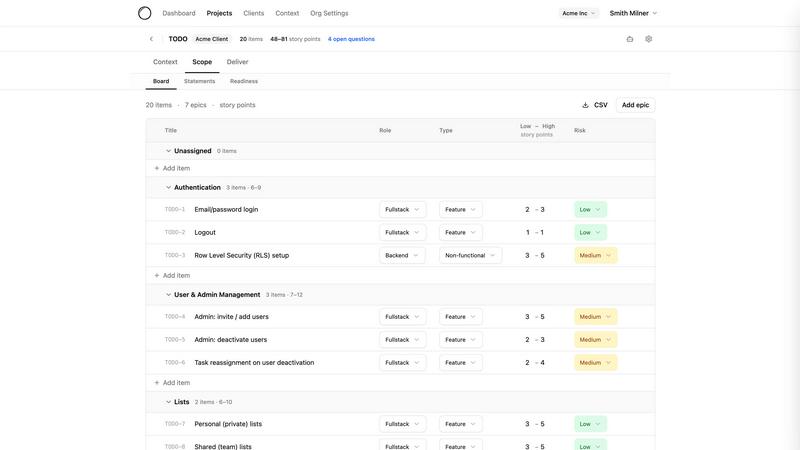
ScopeSnap leverages advanced AI technology to transform raw discovery notes into structured project scopes. By analyzing transcripts, emails, and notes, it identifies key requirements and generates a comprehensive backlog, ensuring nothing is overlooked.
Iterative Refinement Process
With ScopeSnap, users can iteratively refine their project scopes. This feature allows developers to review and adjust the structured backlog, assign roles, set estimates, and address any open questions, leading to well-defined project requirements.
Automated Proposal Creation
Once the scope is established, ScopeSnap takes the next step by automatically generating polished proposals or statements of work. This feature saves time and effort, allowing users to focus on project execution rather than proposal formatting.
Comprehensive Backlog Management
ScopeSnap provides a structured backlog management system, where users can visualize their project tasks. Developers can easily track epics, scope items, and any assumptions or questions, ensuring a clear understanding of the project at all times.
Skene
Automated Growth Optimization
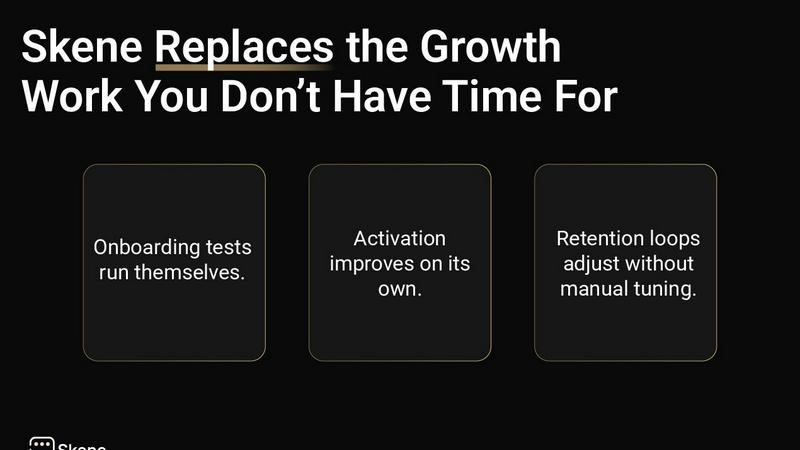
Skene automates the continuous optimization of user onboarding, activation, and retention. By analyzing user interactions and identifying friction points, it autonomously generates enhanced user flows that improve overall user experience without manual intervention.
Seamless Codebase Integration
Skene connects directly with your GitHub or GitLab repository to derive signals from your codebase. This integration allows for real-time analysis and updates to growth strategies, ensuring that your product's growth mechanisms evolve alongside its development.
Outcome-Based Pricing Model
With Skene’s outcome-based pricing, you only pay when customers successfully complete their onboarding journey. This model encourages effective growth strategies, as it aligns the pricing with tangible results rather than flat fees.
Real-Time Analytics Dashboard
Skene provides a robust analytics dashboard that delivers insights into user progress, completion rates, and engagement metrics. This data-driven approach helps identify bottlenecks in the onboarding process, enabling continuous improvement based on real user behavior.
Use Cases
ScopeSnap
Freelance Project Scoping
Freelancers can use ScopeSnap to convert their discovery calls into structured project scopes. By inputting their notes, they can generate a clear and organized backlog, making it easier to provide accurate estimates and proposals.
Agency Collaboration
Software agencies can utilize ScopeSnap for team collaboration on client projects. The tool allows multiple team members to contribute to the scope, ensuring all perspectives are considered and enhancing the overall quality of the project plan.
Proposal Standardization
Agencies and freelancers can benefit from ScopeSnap's automated proposal creation feature. By standardizing the proposal format, users can ensure consistency in their client communications while saving significant time on document preparation.
Client Communication Enhancement
ScopeSnap improves communication with clients by providing clear and structured project scopes. This transparency helps build trust, as clients can see a detailed breakdown of the project, making it easier to align expectations and requirements.
Skene
Streamlining Onboarding for New Users
Indie developers can leverage Skene to create a smooth onboarding experience for new users. By automating the onboarding process, Skene helps users quickly understand the product's value, leading to higher activation rates and reduced churn.
Enhancing Feature Adoption
Skene can identify opportunities for feature adoption by analyzing user behavior. By optimizing the activation flows, it ensures that users engage with key features, maximizing the product's value and enhancing user satisfaction.
Retention Loop Optimization
For early-stage startups, retaining users is crucial. Skene automates the analysis of user behavior to optimize retention loops, ensuring that users remain engaged over time and reducing the risk of churn through timely interventions.
Facilitating Continuous Improvement
With its self-learning capabilities, Skene facilitates a cycle of continuous improvement. By regularly analyzing user interactions and updating growth strategies, it helps developers adapt their products to meet changing user needs and preferences.
Overview
About ScopeSnap
ScopeSnap is an innovative AI-driven tool designed specifically for freelance developers and software agencies. It streamlines the often chaotic process of turning discovery notes into structured project scopes, precise estimates, and polished client proposals. Many developers find the estimation phase of custom software projects to be slow and fraught with risks; critical requirements can be overlooked, scopes remain vague, and assembling proposals can take hours. ScopeSnap addresses these challenges by providing a clear workflow that helps users break down project ideas into well-defined tasks. By iteratively refining the scope, developers can ensure that every feature is thoroughly understood and confidently estimated. Once the scope is finalized, ScopeSnap automatically generates a professional proposal or statement of work, ready for client delivery. This efficiency makes ScopeSnap an invaluable resource for freelancers, consultants, and agencies engaged in custom development projects.
About Skene
Skene is an innovative, fully automated Product-Led Growth (PLG) iteration engine tailored for indie developers and early-stage startups. It eliminates the need for dedicated growth teams by automating the optimization of key processes such as onboarding, activation, and retention. Skene's core value proposition is its ability to analyze user behavior to identify friction points, enabling it to autonomously create and test improved user flows. This self-learning growth engine not only enhances the onboarding experience but also streamlines activation and optimizes retention loops over time. By simplifying traditional growth strategies, Skene acts as a "growth team in a box," allowing developers to concentrate on product development while Skene efficiently manages growth. Its infrastructure connects directly to the codebase, ensuring that growth is seamlessly integrated into the development process, fostering a product-first approach to user engagement.
Frequently Asked Questions
ScopeSnap FAQ
How does ScopeSnap improve project estimation?
ScopeSnap enhances project estimation by breaking down project ideas into clear, estimatable tasks using AI. This reduces the risk of missing important requirements and helps ensure accurate estimates.
Can multiple users collaborate on a project in ScopeSnap?
Yes, ScopeSnap supports collaboration among team members. Users can work together to refine the project scope, assign roles, and review estimates, making it ideal for agencies and teams.
What types of documents can ScopeSnap generate?
ScopeSnap can automatically generate polished proposals and statements of work from the structured project scope. This feature allows users to present professional documents to clients quickly.
Is ScopeSnap suitable for all types of development projects?
ScopeSnap is specifically designed for freelance developers, consultants, and software agencies focusing on custom development projects. Its features are tailored to address the unique challenges faced in these environments.
Skene FAQ
What is PLG software?
PLG (Product-Led Growth) software enables users to discover the value of a product without manual intervention from sales or customer success teams. It automates the user journey, guiding users towards activation and strengthening retention through the product itself.
How is Skene different from traditional customer experience software?
Unlike traditional customer experience tools that require manual setup and maintenance, Skene reads your codebase to automatically generate onboarding processes and lifecycle automation. This means that when you push code updates, your growth strategies update automatically without additional effort.
How long does it take to set up?
Setting up Skene takes less than 60 seconds. Simply connect your GitHub or GitLab repository for read-only access, and Skene will analyze your codebase to generate the necessary PLG flows without requiring code changes or API modifications.
Is my code secure with Skene?
Yes, your code is secure. Skene requires only read-only access to your repository, and all analyses take place in a secure, isolated environment. This ensures that your intellectual property remains protected while benefiting from Skene’s capabilities.
Alternatives
ScopeSnap Alternatives
ScopeSnap is an AI-driven tool designed to streamline the project scoping and proposal process for freelancers, software agencies, and consultants. By transforming fragmented discovery notes into structured project scopes and client-ready proposals, it enhances productivity and minimizes the risks associated with estimating custom software projects. Users often seek alternatives to ScopeSnap for various reasons, including pricing concerns, the need for different features, or compatibility with specific platforms. When considering an alternative, it's crucial to evaluate the tool's usability, the comprehensiveness of its features, and how well it integrates into your existing workflow to ensure a seamless transition and continued efficiency.
Skene Alternatives
Skene is an innovative tool that automates onboarding and growth for indie developers and early-stage startups, positioning itself within the Product-Led Growth (PLG) category. Users often seek alternatives to Skene due to various reasons, such as pricing concerns, specific feature sets, or compatibility with their existing platforms. Understanding what to look for in an alternative is crucial; prioritize features that align with your growth strategy, ensure the solution can integrate seamlessly with your tech stack, and consider the scalability of the options available. When searching for alternatives, it’s essential to evaluate how each solution can deliver on automation, user flow optimization, and analytics capabilities similar to Skene. Look for tools that provide real-time insights into user behavior and offer flexible pricing models to suit your budget. Additionally, ensure that the alternative can grow with your needs, supporting both onboarding and retention strategies effectively while minimizing the need for extensive manual intervention.