Cleanlist AI vs Product Launchpad
Side-by-side comparison to help you choose the right product.

Cleanlist AI enriches your leads with verified emails and phone numbers for seamless B2B outreach in seconds.
Last updated: February 27, 2026

Launch your product to early adopters and keep getting visibility, traffic, and users over time.
Visual Comparison
Cleanlist AI

Product Launchpad
Overview
About Cleanlist AI
Cleanlist AI is an advanced data operating system tailored for modern go-to-market (GTM) teams looking to optimize their lead generation and enrichment processes. It provides sales and marketing professionals with access to high-quality, verified contact data through its innovative waterfall enrichment engine. Users can easily upload a CSV file or connect their CRM directly, allowing Cleanlist to leverage over 15 top-tier data providers, including Wiza, Findymail, and Lusha. This robust system boasts an impressive 98% accuracy rate for the returned data, making it an essential tool for businesses aiming to improve their outreach and lead conversion rates. With features such as email verification, smart agents for data cleaning, and seamless CRM integrations, Cleanlist AI empowers teams to operate efficiently, driving growth and success in their outreach initiatives. The platform is particularly beneficial for sales teams, marketers, and businesses seeking to enhance their outreach efforts with reliable data.
About Product Launchpad
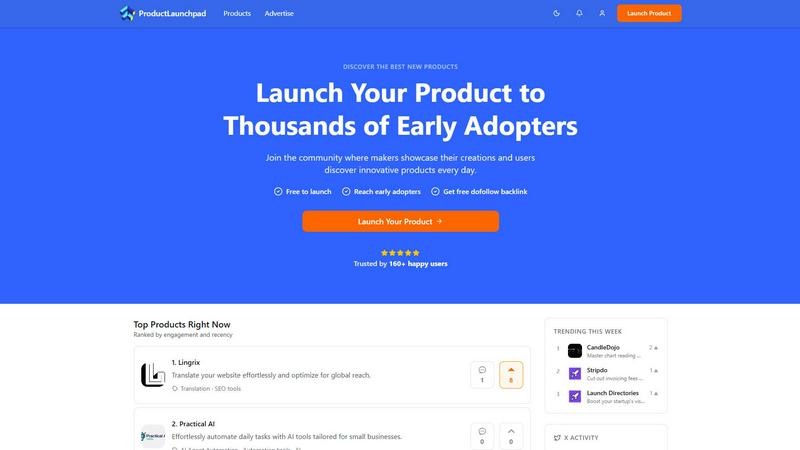
ProductLaunchpad is a launch platform for founders, indie hackers, and marketing teams who want consistent growth, not a short spike. Most platforms give you attention for a day. After that, your product disappears. ProductLaunchpad is built differently.
Your product stays discoverable and continues to reach early adopters over time. You can launch in minutes with AI-assisted submission, get a free dofollow backlink, and improve your visibility in search engines and LLMs.
The focus is on long-term exposure and matching products with the right users. This helps you generate ongoing traffic, feedback, and signups instead of chasing one-time launch metrics.