CloudBurn vs Mod
Side-by-side comparison to help you choose the right product.

CloudBurn
CloudBurn shows AWS cost estimates in pull requests to prevent costly mistakes before deployment.
Last updated: February 28, 2026

Mod is a CSS framework with ready-made components to build SaaS app interfaces quickly.
Visual Comparison
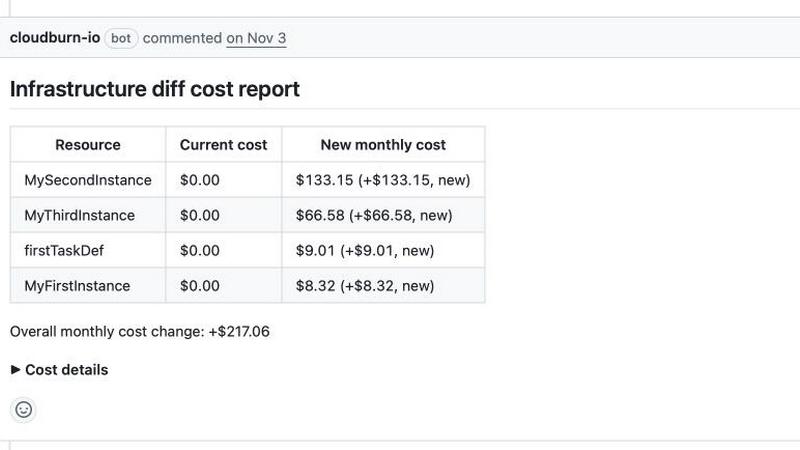
CloudBurn
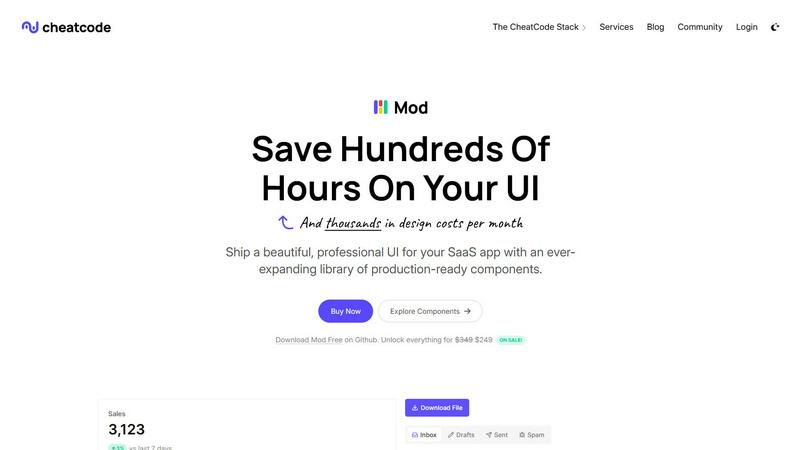
Mod
Feature Comparison
CloudBurn
Automated Pull Request Cost Analysis
CloudBurn seamlessly integrates with your GitHub workflow to provide automated cost analysis on every pull request. Once configured, it automatically detects infrastructure changes from tools like AWS CDK Diff or Terraform Plan, calculates the precise monthly cost impact, and posts a detailed, easy-to-read report directly in the PR conversation. This eliminates manual estimation and ensures cost awareness is a natural part of every code review cycle without requiring extra steps from developers.
Real-Time AWS Pricing Data
The platform uses always up-to-date, real-time AWS pricing data to generate its estimates. This ensures that the cost reports reflect the actual current prices for services, instance types, storage, and data transfer in your specific region. You can trust that the dollar figures you see are accurate and not based on outdated spreadsheets or static price lists, which is critical for making reliable financial decisions about your architecture.
Detailed Line-Item Cost Breakdown
Beyond a simple total, CloudBurn provides a granular, line-item breakdown of costs for each new or modified resource. The report shows the current cost, the new projected monthly cost, and the delta for every resource. It also includes details like hourly rates, AWS usage types, and service descriptions, giving developers and reviewers full transparency into what is driving the cost change and where optimizations can be made.
Secure GitHub-Centric Integration
Security and simplicity are paramount. CloudBurn's setup, billing, and permissions are handled 100% through GitHub. You install it via the GitHub Marketplace, and it operates using standard GitHub Actions. This means no separate dashboard logins, no need to share AWS credentials directly with a third party, and a setup that aligns perfectly with developer-centric, GitOps-based workflows, ensuring a secure and frictionless adoption.
Mod
Extensive Component Library
Mod provides over 88 professionally designed, accessible, and fully responsive UI components. This library covers everything from basic buttons, forms, and navigation bars to complex data tables, modals, dashboards, and pricing sections. Each component is built with SaaS applications in mind, featuring clean, modern aesthetics and interactive states. This eliminates the need to build these elements from scratch, saving hundreds of hours of development and design time while ensuring a high-quality, cohesive look across your entire application.
Customizable Design System with Multiple Themes
Beyond individual components, Mod offers a complete and flexible design system. It includes 168 distinct style utilities and two built-in themes (light and dark mode) that can be applied globally. The system is built with CSS custom properties (variables), making it incredibly easy to customize colors, spacing, typography, and more to match your brand identity. The mobile-first, responsive grid ensures your application looks perfect on any device, from desktops to smartphones.
Framework-Agnostic Integration
A key strength of Mod is its complete independence from any specific JavaScript framework. It is delivered as pure, well-structured CSS. This means you can seamlessly integrate it into a Next.js or Nuxt.js project, a SvelteKit application, a Vite-powered site, or even a traditional server-rendered application using Rails or Django. This flexibility future-proofs your investment and allows teams to adopt Mod regardless of their preferred or existing technology stack.
Comprehensive Icon Suite & Dark Mode
Mod includes a library of over 1,500 consistent, sharp icons that align perfectly with the component aesthetics, removing the need to source or manage icons from multiple third-party packs. Furthermore, full support for dark mode is built directly into the design system. Implementing a theme switcher or respecting user OS preferences becomes straightforward, providing a modern user experience that is increasingly expected in today's applications.
Use Cases
CloudBurn
Preventing Costly Misconfigurations in PR Reviews
The primary use case is catching expensive mistakes during code review. For example, a developer might accidentally change an instance type from t3.micro to t3.xlarge or provision an unencrypted, publicly accessible S3 bucket with excessive storage. CloudBurn will flag the significant cost increase or high-risk resource immediately in the PR, allowing the team to question and correct the configuration before it merges, preventing a surprise bill.
Enabling Data-Driven Architecture Decisions
Teams can use CloudBurn to compare the cost implications of different architectural approaches directly in their feature branches. When debating between using AWS Fargate versus EC2 instances, or choosing a database instance size, developers can create PRs for each option. CloudBurn's cost reports provide concrete financial data to inform these decisions, helping teams balance performance, scalability, and cost from the outset.
Establishing Team-Wide Cost Accountability
CloudBurn fosters a culture of financial responsibility (FinOps) within engineering teams. By making cost impact visible to every contributor and reviewer, it encourages developers to consider cost as a non-functional requirement. This shared visibility ensures that cost optimization is a collective effort, not just a task for a separate FinOps team, leading to more sustainable infrastructure spending.
Streamlining Compliance and Budget Governance
Platform engineering and leadership teams can use CloudBurn to enforce soft budget guards. By requiring cost review on all infrastructure PRs, they can ensure that no single change exceeds a certain cost threshold without explicit approval. This creates an automated governance layer that helps keep projects within budget and aligns infrastructure spending with business objectives without heavy-handed manual processes.
Mod
Rapid SaaS MVP Development
For founders and solo developers building a minimum viable product, Mod is the ultimate accelerator. Instead of spending weeks designing and coding a basic UI, you can use Mod's components to assemble a professional-looking landing page, authentication flow, and user dashboard in days. This allows you to validate your business idea with real users much faster and with a product that appears established and trustworthy.
Standardizing UI Across Development Teams
In growing engineering teams, inconsistent UI implementation is a common pain point. Mod acts as a single source of truth for the front-end. By providing a shared component library and design tokens, it ensures that every developer builds features that look and behave consistently, whether they are working on the settings page, the admin panel, or the customer portal. This reduces review cycles and improves overall product quality.
Modernizing Legacy Application Interfaces
For companies with functional but outdated web applications, a full UI redesign can be a daunting, expensive project. Mod offers a practical path to modernization. Developers can incrementally replace old, custom CSS with Mod's components and styles, section by section. This approach delivers visual improvements quickly without a risky, complete rewrite, steadily enhancing the user experience over time.
Building Internal Tools and Admin Panels
Internal dashboards and admin interfaces are crucial for business operations but often don't justify a large design budget. Mod is perfect for this scenario. Its comprehensive set of data display components, forms, and layouts allows developers to build powerful, intuitive, and good-looking internal tools efficiently. This improves productivity for internal teams without diverting significant resources from customer-facing product work.
Overview
About CloudBurn
CloudBurn is a proactive FinOps and cost intelligence platform designed for engineering teams using Infrastructure-as-Code (IaC) tools like Terraform and AWS CDK. It directly tackles the pervasive problem of unexpected and spiraling AWS bills by integrating cost visibility into the developer workflow. The tool is built for developers, platform engineers, and DevOps teams who want to shift cost governance left, catching expensive infrastructure misconfigurations during code review—before they are ever deployed to production. By automatically analyzing pull requests, CloudBurn provides real-time, line-item AWS cost estimates for proposed changes, posting a clear report as a comment. This transforms cost from a retrospective, finance-team concern into a real-time, actionable metric for engineers. Its core value proposition is preventing financial waste by enabling informed architectural decisions early, fostering a culture of cost accountability, and delivering an immediate return on investment by avoiding costly mistakes that traditionally only surface weeks later on an invoice.
About Mod
Mod is a comprehensive, production-ready CSS framework designed specifically for building modern, polished SaaS (Software as a Service) user interfaces. It solves the common and costly problem of UI design and front-end development for startups and development teams by providing a vast, meticulously crafted library of components and styles. The core value proposition of Mod is acceleration: it enables developers to ship professional, visually consistent, and fully responsive applications dramatically faster, without the need for a dedicated designer or countless hours spent on CSS. It is built for solo developers, small startups, and engineering teams who need to move quickly from idea to MVP and beyond, ensuring their product looks credible and professional from day one. As part of the CheatCode developer stack, Mod integrates seamlessly with its companion tools but is fundamentally framework-agnostic. This means it works effortlessly with popular front-end frameworks like Next.js, Nuxt, Svelte, and Vite, as well as back-end-focused frameworks like Rails and Django, making it a versatile choice for any tech stack. By offering a complete design system out of the box, Mod drastically reduces design debt, eliminates UI inconsistency, and allows teams to focus their energy on core application logic and unique features instead of rebuilding common interface elements.
Frequently Asked Questions
CloudBurn FAQ
How does CloudBurn calculate the cost estimates?
CloudBurn calculates costs by analyzing the output of your Infrastructure-as-Code tool's diff command (like cdk diff or terraform plan). It identifies the specific AWS resources being added, modified, or removed. Then, it cross-references these resources with real-time AWS pricing data for your configured region, applying standard assumptions for monthly usage (730 hours) to generate a projected monthly cost. The result is a detailed report showing the impact per resource and in total.
Is my code or AWS access secure with CloudBurn?
Yes, security is a core design principle. CloudBurn does not require direct access to your AWS accounts. All analysis is performed based on the plan/diff output generated securely within your own GitHub Actions workflow. Billing and permissions are managed entirely through GitHub, so there are no separate credentials to manage. The tool follows the principle of least privilege and is verified by GitHub.
What IaC tools and cloud providers does CloudBurn support?
Currently, CloudBurn specializes in supporting AWS cloud infrastructure. It natively integrates with the two most popular IaC frameworks for AWS: HashiCorp Terraform and the AWS Cloud Development Kit (AWS CDK). The setup involves adding the corresponding GitHub Action (Terraform Plan PR Commenter or AWS CDK Diff PR Commenter) to your repository's workflow.
Can I use CloudBurn for free?
Yes, CloudBurn offers a free Community plan that you can use forever. They also provide a 14-day trial of their Pro features, which include more advanced reporting and capabilities, with no credit card required to start. You can begin using the core pull request cost analysis functionality at no cost to evaluate its value for your team.
Mod FAQ
What frameworks is Mod compatible with?
Mod is completely framework-agnostic. It is written in plain CSS and can be used with any front-end or full-stack framework that can import CSS files. This includes, but is not limited to, Next.js, Nuxt.js, Svelte/SvelteKit, Vue.js, React, Vite, Astro, Ruby on Rails, Django, Laravel, and plain HTML websites. Its utility-class approach integrates smoothly into any environment.
Does Mod include JavaScript for interactive components?
No, Mod is a CSS framework focused on styling, layout, and visual presentation. It provides the complete styles for interactive states (like hover, focus, active) for components such as dropdowns or modals. However, the actual interactive functionality (opening/closing, toggling) must be implemented using your chosen framework's JavaScript or a dedicated JavaScript library. This separation keeps Mod lightweight and flexible.
How customizable are the components and themes?
Mod is highly customizable. It is built using CSS custom properties (variables) for core design tokens like colors, fonts, spacing, and radii. You can easily override these variables in your own CSS to match your brand. Furthermore, the utility-class system allows you to modify individual components on the fly. The two included themes (light/dark) serve as excellent starting points that can be extended or completely altered.
What is the update policy for Mod?
Mod receives yearly updates as part of the CheatCode ecosystem. These updates ensure the component library stays current with modern design trends, accessibility standards, and best practices. This update policy provides a predictable maintenance cycle, giving developers confidence that the tool they are building with will be supported and improved over the long term without constant, breaking changes.