Pipeline vs qtrl.ai
Side-by-side comparison to help you choose the right product.

Pipeline
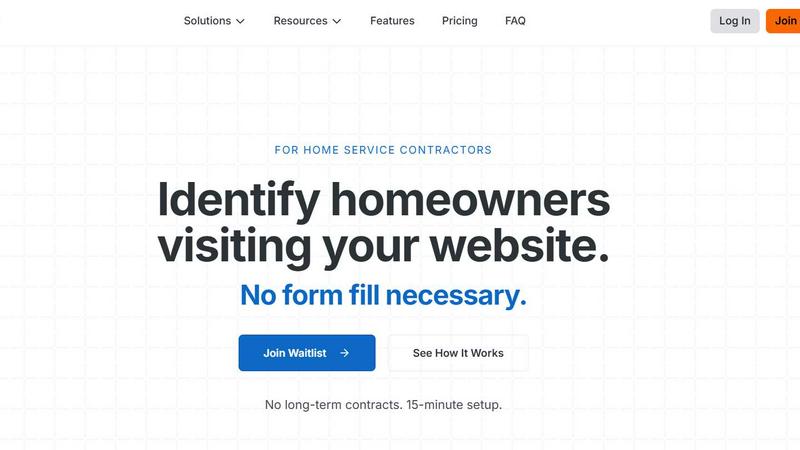
Pipeline reveals anonymous website visitors, capturing their contact info to boost your leads without form submissions.
Last updated: February 26, 2026

qtrl.ai
qtrl.ai helps QA teams scale testing with AI agents while maintaining full control and governance.
Last updated: March 4, 2026
Visual Comparison
Pipeline
qtrl.ai
Feature Comparison
Pipeline
Visitor Identification
Pipeline employs a simple script that, once installed on your website, can identify the names, addresses, and emails of homeowners browsing your site without them needing to fill out a form. This feature ensures that you are not losing out on valuable leads who may otherwise leave your site unnoticed.
CRM Integration
The tool integrates seamlessly with popular CRM platforms such as ServiceTitan, HubSpot, Jobber, and Pipedrive. This allows for automatic synchronization of captured leads, ensuring that all contact details are readily accessible and organized within your existing systems.
Automated Outreach
With Pipeline, you can automate your follow-up communications. The system triggers personalized emails and can even queue postcards to be sent to newly identified leads. This feature reduces manual effort and ensures timely engagement with potential customers.
Real-Time Notifications
Pipeline provides immediate notifications via Slack or email whenever a new visitor is identified. This real-time alert system keeps your sales team informed and ready to act quickly, enhancing the chances of converting leads into paying customers.
qtrl.ai
Enterprise-Grade Test Management
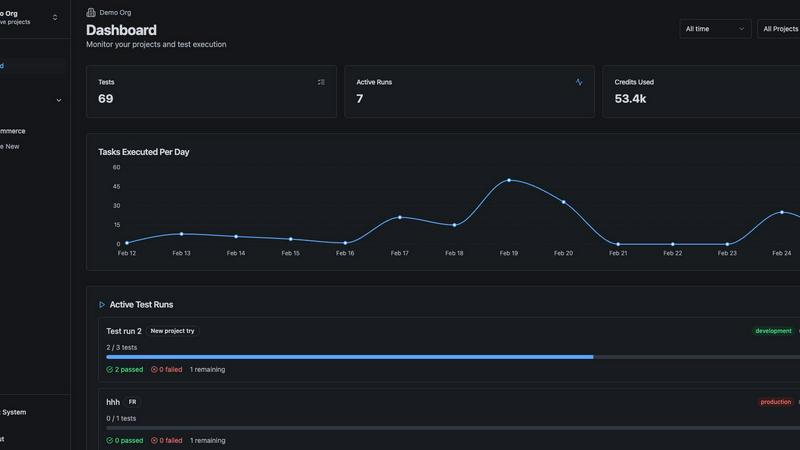
qtrl provides a centralized command center for all QA activities. Teams can create and organize test cases, build detailed test plans, execute manual and automated test runs, and establish clear traceability from requirements to test coverage. Real-time dashboards offer instant visibility into quality metrics, pass/fail rates, and potential risk areas, making it ideal for managers and leads who need audit trails and compliance-ready reporting without sacrificing agility.
Progressive AI & Autonomous Agents
This feature introduces intelligent automation at your team's pace. Start by writing simple, high-level test instructions in plain English for the AI agent to execute. As trust builds, leverage agents to automatically generate full UI test scripts from descriptions, maintain them through application changes, and run them at scale across multiple browsers and environments. All AI suggestions are fully reviewable and approvable, ensuring humans remain in the loop and governance is never compromised.
Adaptive Memory & Context Awareness
qtrl's AI builds a living, evolving knowledge base of your application. It learns from every interaction—including exploratory testing, test execution results, and logged issues. This accumulated context powers smarter, more accurate test generation over time. The system becomes more effective and aware of your specific application's behavior and coverage gaps, proactively suggesting new tests to improve overall quality.
Multi-Environment Execution with Governance
Execute tests securely across any environment—development, staging, or production. qtrl supports per-environment configuration variables and encrypted secrets, ensuring sensitive data like API keys or passwords are never exposed to the AI agents. You define default environments and rules, giving agents permissioned autonomy to operate at scale while maintaining stringent security and operational controls.
Use Cases
Pipeline
HVAC Contractors
HVAC companies can leverage Pipeline to capture details of potential clients who visit their website but do not fill out inquiry forms. This enables them to follow up with targeted offers and increase their booking rates significantly.
Plumbing Services
Plumbers can benefit from Pipeline by identifying leads from their website traffic, allowing them to engage with potential customers before they choose a competitor. This proactive approach can help them secure more jobs without increasing ad spending.
Roofing Companies
Roofing contractors can utilize Pipeline to reach out to individuals who have shown interest in their services online. This allows them to connect with warm leads who are already considering their offerings, leading to higher conversion rates.
Landscaping Businesses
Landscapers can use Pipeline to build an email list from website visitors. This enables them to send promotional offers or seasonal discounts directly to interested homeowners, ensuring they fill their schedules efficiently.
qtrl.ai
Scaling Beyond Manual Testing
QA teams overwhelmed by repetitive manual test cycles can use qtrl to systematically introduce automation. They begin by structuring their existing manual cases in the platform, then progressively offload execution to AI agents. This allows the team to scale test coverage and frequency without linearly increasing headcount, freeing human testers to focus on complex, exploratory, and high-value testing activities.
Modernizing Legacy QA Workflows
Companies relying on outdated, siloed, or script-heavy automation frameworks can modernize without a risky "big bang" replacement. qtrl integrates with existing tools and processes, allowing teams to gradually transition. They can maintain current scripts while using qtrl's AI to generate new, more maintainable tests and centralize all management and reporting, reducing technical debt and brittleness over time.
Ensuring Governance in Enterprise AI Adoption
Enterprises that require strict compliance, audit trails, and control can safely adopt AI for QA. qtrl's permissioned autonomy, full visibility into agent actions, and review gates ensure that all automation is transparent and accountable. This allows large organizations to gain the speed benefits of AI while meeting internal security, regulatory, and governance mandates without relying on unpredictable "black-box" solutions.
Accelerating Product-Led Engineering Teams
Fast-moving product and engineering teams that need rapid quality feedback can integrate qtrl into their CI/CD pipelines. Developers and product managers can write high-level test instructions for features, and qtrl's agents can automatically generate and run the corresponding tests. This creates continuous quality feedback loops, catches regressions early, and helps maintain high release velocity without creating a testing bottleneck.
Overview
About Pipeline
Pipeline is an innovative lead identification tool designed specifically for home service companies. It empowers businesses to capture and convert anonymous website traffic into actionable leads without requiring any form submissions from potential clients. By integrating seamlessly with existing Customer Relationship Management (CRM) systems, Pipeline identifies up to 40% of website visitors, significantly surpassing the industry average conversion rate of just 4%. This means that businesses can potentially increase their lead flow by ten times, allowing them to fill their sales pipelines with valuable customer information, including names, emails, and addresses. This not only enhances marketing efforts but also ensures that businesses can follow up with potential customers effectively through various channels like email, text, and direct mail. The straightforward installation process and lack of long-term contracts make Pipeline an attractive solution for contractors looking to maximize their marketing investments and improve their lead generation strategies.
About qtrl.ai
qtrl.ai is a modern, AI-powered QA platform designed to solve the fundamental scaling challenges faced by software development teams. It bridges the gap between slow, manual testing processes and the brittle, expensive complexity of traditional test automation. qtrl provides a unified solution that combines enterprise-grade test management with intelligent, trustworthy AI automation. This allows teams to organize test cases, plan runs, trace requirements, and track quality metrics from a single centralized hub, ensuring full visibility and governance. The platform's progressive approach to AI is its key differentiator; instead of forcing a risky, fully autonomous model, it allows teams to start with structured manual management and gradually introduce AI agents that can generate, maintain, and execute UI tests from plain English. Built for product-led engineering teams, QA groups moving beyond manual testing, and enterprises requiring strict compliance, qtrl offers a controlled, step-by-step path to faster, more intelligent, and scalable quality assurance without sacrificing oversight or trust.
Frequently Asked Questions
Pipeline FAQ
How does Pipeline identify website visitors?
Pipeline uses a simple script that you add to your website's header. This script captures visitor data such as names, emails, and addresses without requiring any form submissions.
What kind of businesses can benefit from Pipeline?
Pipeline is specifically designed for home service companies, including HVAC, plumbing, roofing, electrical, and landscaping services, allowing them to maximize lead generation from website traffic.
Is there a long-term contract required to use Pipeline?
No, Pipeline does not require any long-term contracts. Users can enjoy flexibility with a straightforward setup process that takes only 15 minutes.
What kind of integrations does Pipeline support?
Pipeline integrates with several CRM platforms, including ServiceTitan, HubSpot, Jobber, and Pipedrive, as well as offering Zapier integrations for enhanced automation and functionality.
qtrl.ai FAQ
How does qtrl.ai ensure the AI doesn't make unpredictable changes?
qtrl is built on a principle of "permissioned autonomy." The AI does not make changes or execute tests without review and approval, unless explicitly configured to do so within strict rules you define. All AI-generated test scripts and modifications are presented for human review first. You maintain full visibility into every action the agent takes, ensuring there are no "black-box" decisions and you remain in complete control.
Can qtrl.ai work with our existing tools and CI/CD pipeline?
Yes, qtrl is designed to integrate into real-world workflows. It offers requirements management integration, supports connections to CI/CD pipelines for automated test execution as part of your build process, and provides APIs to work with your existing toolchain. It acts as a centralized QA layer that complements your current development ecosystem rather than forcing a complete replacement.
Is qtrl suitable for teams with no prior test automation experience?
Absolutely. qtrl's progressive approach is ideal for teams starting their automation journey. You can begin by using it purely as a test management tool. When ready, you can start with simple, English-language instructions for the AI to execute, which requires no coding. This allows teams to build automation expertise and trust in the platform gradually, at their own pace.
How does qtrl handle testing across different environments and with sensitive data?
qtrl provides robust multi-environment execution capabilities. You can define different environments (dev, staging, prod) with their own variables. Crucially, sensitive data like passwords or API keys can be stored as encrypted secrets that are injected at runtime. The AI agents never have direct access to these raw secrets, ensuring security and compliance when testing across various stages of your deployment pipeline.
Alternatives
Pipeline Alternatives
Pipeline is a cutting-edge tool designed for home service companies, falling under the marketing category. It helps businesses identify anonymous website traffic, allowing them to capture more leads even when potential customers don’t fill out forms. With its ability to identify an average of 40% of site visitors, Pipeline significantly enhances lead generation compared to the industry standard. Users often seek alternatives to Pipeline for various reasons including pricing, feature sets, or specific platform compatibility. When looking for a suitable alternative, it’s important to consider factors such as ease of integration with existing systems, the comprehensiveness of lead identification capabilities, and the overall return on investment that the tool can provide.
qtrl.ai Alternatives
qtrl.ai is a modern QA platform in the automation and dev tools category. It helps software teams scale their testing efforts by combining enterprise-grade test management with trustworthy AI automation, allowing for a gradual and controlled adoption of intelligent agents. Users often explore alternatives for various reasons. These can include budget constraints, the need for different feature sets, specific platform integrations, or simply evaluating the market to ensure a tool aligns perfectly with their team's size, tech stack, and workflow maturity. When considering other options, focus on your core needs. Look for a solution that balances robust test management with the level of automation you require. Key evaluation points should include governance controls, the transparency of any AI features, ease of integration into your development lifecycle, and the overall scalability to support your team's growth without introducing unnecessary complexity.