
Autheo
Autheo combines a Layer-0 OS with a Layer-1 blockchain to unify identity, compute, storage, and AI into one interoperable foundation for scalable.
Visit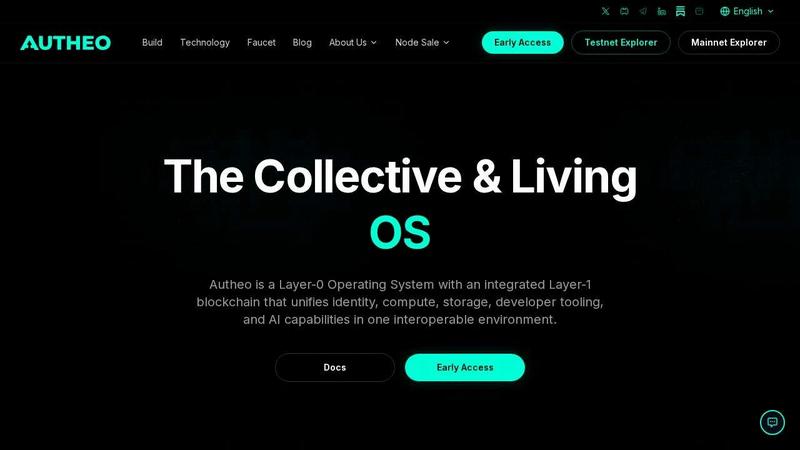
About Autheo
Autheo is a Layer-0 Operating System with an integrated Layer-1 blockchain designed to solve the core fragmentation problem in Web3. Today, developers must juggle multiple APIs, SDKs, and platforms to build decentralized applications, while enterprises struggle to bridge the gap between Web2 and Web3. This results in costly integrations, fragile systems, and projects that fail to scale across both worlds. Autheo eliminates this complexity by unifying identity, compute, storage, developer tooling, and AI capabilities into one interoperable environment. It is built for developers, enterprises, and innovators who want to launch scalable applications, sovereign ecosystems, and intelligent systems without piecemeal integrations. The platform provides a complete foundation where builders can deploy chains, apps, and AI-native tools that work seamlessly from day one. Autheo is more than just infrastructure; it is a living network that learns, adapts, and evolves as more projects fuel it. With over 100 co-founders and contributors across blockchain, AI, gaming, and open-source, Autheo represents the third wave of blockchain integration where builders stop renting infrastructure and start owning the internet itself.
Features of Autheo
Layer-0 + Layer-1 Foundation
Autheo provides a fast, sovereign blockchain foundation that combines the flexibility of a Layer-0 operating system with the security and functionality of an integrated Layer-1 blockchain. This architecture allows developers to launch their own chains and applications with high throughput and low latency, while maintaining full sovereignty over their network. The dual-layer design ensures that scalability, security, and decentralization are balanced effectively, solving the blockchain trilemma for real-world use cases.
Core Infrastructure
The platform includes a decentralized cloud with compute, storage, and messaging capabilities built directly into the OS. This eliminates the need for third-party infrastructure providers and reduces integration complexity. Developers can leverage distributed resources for running applications, storing data, and enabling real-time communication between components. The infrastructure is designed to be resilient, cost-effective, and scalable, supporting everything from small dApps to enterprise-grade systems.
Full-Stack SDKs
Autheo offers a unified development framework that covers frontend, backend, smart contracts, and orchestration in one SDK. This means developers no longer need to learn and integrate multiple disparate tools. The SDKs provide consistent APIs and abstractions across all layers, enabling rapid prototyping and deployment. Whether you are building a DeFi protocol, a gaming platform, or an AI agent, the SDKs streamline the entire development lifecycle from coding to deployment.
DevHub and TheoID
DevHub is the native development environment for testing, deploying, and scaling projects on Autheo. It provides a workspace where developers can simulate network conditions, debug smart contracts, and manage deployments. TheoID delivers post-quantum secure authentication and sovereignty for both people and digital assets. This identity layer ensures that users and devices can interact securely across the network, with privacy and control built into the core protocol.
Use Cases of Autheo
Building Sovereign Blockchain Networks
Developers and enterprises can launch their own Layer-1 or Layer-2 chains on Autheo with full sovereignty over governance, tokenomics, and network rules. This is ideal for projects that need a dedicated blockchain environment without the overhead of building from scratch. For example, a gaming studio can create a gaming-specific chain with fast transaction finality and low fees, while retaining control over updates and community participation.
Decentralized AI and Intelligent Automation
Autheo integrates AI capabilities directly into the operating system, enabling developers to build AI-native applications and agents that adapt and learn over time. Use cases include automated trading bots, predictive analytics for supply chains, and personalized content delivery. The AI tools work seamlessly with the identity and compute layers, allowing agents to authenticate, access data, and execute transactions autonomously within a secure environment.
Enterprise Web2 to Web3 Migration
Enterprises can migrate existing Web2 applications to Web3 using Autheo's full-stack SDKs and unified infrastructure. The platform abstracts away the complexity of blockchain integration, allowing businesses to add decentralized identity, tokenization, and smart contract functionality to their existing systems. This is particularly valuable for industries like finance, healthcare, and logistics that require compliance, auditability, and interoperability.
Decentralized Cloud Computing and Storage
Autheo's core infrastructure supports decentralized compute and storage, making it suitable for hosting websites, running backend services, and storing user data without relying on centralized providers like AWS or Google Cloud. Developers can build censorship-resistant applications, file sharing platforms, or content delivery networks that leverage the network's distributed resources. The messaging system also enables real-time applications like chat, notifications, and IoT data streaming.
Frequently Asked Questions
What is Autheo?
Autheo is a Layer-0 Operating System with an integrated Layer-1 blockchain that unifies identity, compute, storage, developer tooling, and AI capabilities into one interoperable environment. It is designed to solve the fragmentation problem in Web3 by providing a single foundation for building decentralized applications, sovereign networks, and intelligent systems. The platform includes components like DevHub for development, TheoID for identity, and THEO AI for automation.
What can I build on Autheo?
You can build a wide range of applications including sovereign blockchain networks, decentralized finance protocols, gaming platforms, AI agents, enterprise Web3 solutions, and decentralized cloud services. The platform's full-stack SDKs and integrated infrastructure allow you to create anything from simple smart contracts to complex multi-chain ecosystems. Autheo is particularly suited for projects that need interoperability, scalability, and AI-native capabilities.
How is Autheo different from Ethereum or Solana?
Unlike traditional Layer-1 blockchains like Ethereum or Solana, Autheo is built as a Layer-0 operating system that integrates multiple core components (identity, compute, storage, AI) into a single environment. This eliminates the need for developers to piece together separate tools and services. Additionally, Autheo's architecture supports sovereignty, meaning you can launch your own chain with custom rules, while still benefiting from the network's shared security and interoperability.
Is Autheo live?
Autheo is currently in early access with a testnet explorer and mainnet explorer available. The team is actively building the platform with over 100 co-founders and contributors. A node sale is also ongoing, allowing participants to become validators and support the network. Developers can apply for early access to start building on the platform and test its capabilities before the full public launch.
Pricing of Autheo
Autheo does not currently list standard pricing plans or tiers for its platform. The project is in early access, and pricing details for developer tools, infrastructure usage, or node operation are not publicly available at this time. For the most current information, refer to the official Autheo website or contact the team directly.
Similar to Autheo

AI Image Remover is a free browser tool for erasing people and objects from photos. Upload an image, brush a mask over the distraction


Automate Polymarket's 5 and 15 minute crypto up or down markets with a transparent bot based on a proven strategy that turned 68 into 1.5 million.


Bitcoin Loans Market compares every meaningful Bitcoin-backed loan side by side so you can pick the right one for how you hold your coins.

MadeOnSol gives you one place for Solana tools, KOL trades, intel, and API access.

Stop guessing on perps with scattered data and use Perpfinder to compare fees, volume, and open interest across 85 exchanges in one dashboard.

CreateMyCoin enables anyone to launch a Solana token in just 60 seconds without any coding knowledge or hidden fees.