

Alternatives to OpenMark AI
OpenMark AI benchmarks over 100 LLMs for your specific tasks, providing instant insights on cost, speed, quality, and stability without setup.
Explore 20 alternatives to OpenMark AI. Compare features, pricing, and find the best fit for your needs.

TrueProxies
Residential and datacenter proxy provider with 50M+ ethically sourced IPs across 150+ countries. Unlimited from $4.08/hr, pay-per-GB from $1.64/GB.
Egmatic
No-code 2D game editor: visual node logic, drag-and-drop scenes, live preview. Exports to Windows, macOS, Linux, Android, iOS, Web.

layahost
Jev-compatible typed decisions API: moderation, routing, intent and scoring for any text, hosted in the EU.

laya.tools
A free directory of 950+ projects built on Laya, the open-source decision model. Updated daily.

Sprite Sheet Maker
A free browser-based toolkit for creating, cutting, converting, and previewing sprite sheet animations.
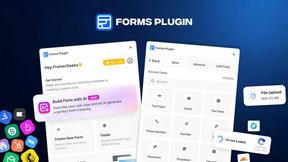
Forms Plugin
The #1 Native Form Builder Plugin for Framer - No Code, No Embeds, No External Platforms.


GPT Image 2 API
Generate and edit production-ready images with GPT Image 2 API, detailed prompts, reference images, clear text, and developer workflows.

Video2URL
Turn videos, images, and files into secure direct links for sharing, embedding, and automated workflows.
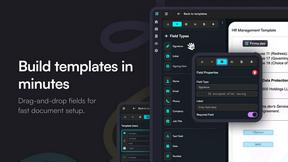
Firma.dev
Pay-as-you-go e-signature API and no-code sending. €0.049 per envelope, no monthly minimums, legally valid in 55+ countries.
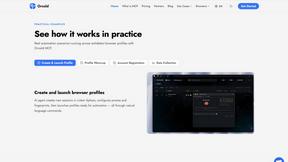
Ornold
Ornold MCP lets AI agents control Chromium and antidetect browsers: click, type, read screens, record workflows, replay profiles without scripts.
AIQualityHQ
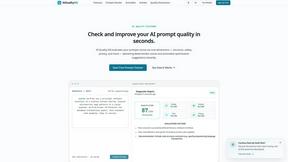
AIQualityHQ instantly checks your AI prompts for structure, safety, privacy, and accuracy with deterministic scores in under 10ms.
RedLinz
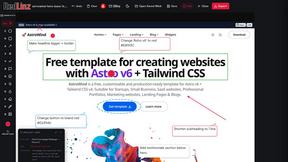
RedLinz turns screenshots into AI prompts by letting you circle and annotate exactly what you want an LLM to change.
About OpenMark AI Alternatives
OpenMark AI is a web-based application designed for benchmarking various large language models (LLMs) based on specific tasks. It allows developers and product teams to evaluate models by comparing metrics such as cost, speed, quality, and stability, making it easier to make informed decisions before deploying AI features. Users often seek alternatives to OpenMark AI for reasons such as pricing variations, specific feature sets, or integration capabilities that better meet their platform needs. When choosing an alternative, it is essential to consider factors such as the range of supported models, the accuracy and reliability of benchmarking results, ease of use, and any associated costs. Look for solutions that provide comprehensive insights into model performance and cost efficiency, ensuring they align with your development goals and workflow requirements.
FAQs about OpenMark AI Alternatives
What is OpenMark AI?
OpenMark AI is a web application that benchmarks over 100 large language models based on various task-specific metrics.
Who is OpenMark AI for?
OpenMark AI is designed for developers and product teams looking to validate or choose a language model before deploying AI features.
Is OpenMark AI free?
OpenMark AI offers both free and paid plans, with details available in the in-app billing section.
What are the main features of OpenMark AI?
Key features include task-level benchmarking, side-by-side comparison of models, and insights into cost efficiency, latency, quality, and stability.