
Self-Healing Integrations
Plumbed.io offers self-healing integrations that automate monitoring and maintenance, ensuring seamless operations and faster deployment.
Visit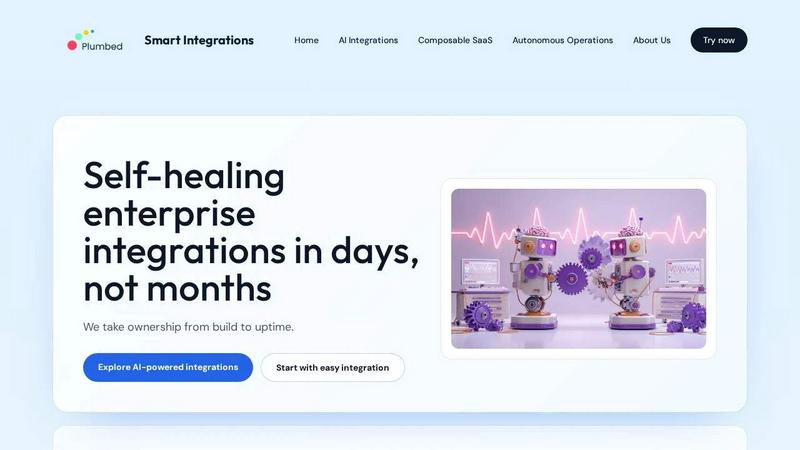
About Self-Healing Integrations
Self-Healing Integrations is an innovative integration platform designed to streamline and optimize the integration processes for businesses. It addresses the common pain points associated with traditional integration methods, which often require extensive resources and time for setup and ongoing maintenance. With Self-Healing Integrations, companies can build, monitor, and maintain custom integrations that adapt to ongoing changes in their operational landscape. It is particularly suited for enterprises looking to enhance their operational efficiency by eliminating the so-called “integration tax” that burdens many organizations with slow and costly integration projects. By leveraging AI-managed lifecycles, Self-Healing Integrations ensures that integrations remain operational, reliable, and up-to-date, enabling businesses to focus on growth rather than the intricacies of integration management.
Features of Self-Healing Integrations
Automated Monitoring
Automated monitoring ensures that integrations are constantly checked for functionality and performance, reducing the need for manual oversight. This feature proactively identifies issues before they escalate, allowing businesses to maintain uninterrupted operations.
Proactive Error Handling
The platform employs AI-driven error handling to automatically resolve integration issues as they arise. This feature minimizes downtime and ensures that data flows seamlessly between systems, providing peace of mind for users who rely on real-time data availability.
Continuous System Updates
Self-Healing Integrations automatically updates systems to accommodate changes in APIs, data formats, and other integration parameters. This continuous updating process ensures that integrations remain functional and relevant without requiring constant manual intervention.
Rapid Deployment
With capabilities for rapid deployment, businesses can launch new integrations significantly faster than traditional methods. This feature eliminates lengthy development cycles, allowing companies to quickly adapt to market changes and new opportunities.
Use Cases of Self-Healing Integrations
E-commerce Integration
Retail businesses can use Self-Healing Integrations to connect their e-commerce platforms with inventory management systems. This integration ensures real-time updates on stock levels, streamlining order processing and improving customer satisfaction.
CRM Synchronization
Companies can utilize the platform to integrate their customer relationship management (CRM) systems with marketing automation tools. This seamless integration allows for efficient data sharing, enhancing customer engagement and marketing effectiveness.
Financial Data Management
Financial institutions can implement Self-Healing Integrations to connect disparate financial systems, ensuring accurate real-time reporting and compliance with regulatory requirements. This integration reduces the risk of errors in financial data processing.
Supply Chain Automation
Manufacturers can leverage the platform to automate connections between suppliers, logistics, and production systems. This integration enhances visibility across the supply chain, optimizing operations and reducing delays.
Frequently Asked Questions
What makes Self-Healing Integrations different from traditional integration tools?
Self-Healing Integrations utilizes AI to automate the entire integration lifecycle, including monitoring, error handling, and updates, which significantly reduces the operational burden and accelerates deployment.
How quickly can I set up my integrations with this platform?
Businesses can start using Self-Healing Integrations in as little as three minutes. The platform is designed for rapid deployment, allowing users to integrate systems without extensive setup time.
Can Self-Healing Integrations handle complex enterprise environments?
Yes, the platform is specifically designed to manage complex integrations across various systems and applications, ensuring reliable operations even in multifaceted enterprise environments.
What types of businesses benefit from using Self-Healing Integrations?
Self-Healing Integrations is ideal for any business that relies on multiple systems and applications, including e-commerce, finance, marketing, and supply chain, allowing them to streamline operations and reduce costs.
Explore more in this category:
Similar to Self-Healing Integrations

Signage and kiosk infrastructure for AI agents. Your agent publishes images, video, streams, web pages and apps to screens via one plugin.screenRIG is

Free YouTube transcripts on the web, a Chrome extension, and an API + MCP server so AI assistants can read YouTube.

Soul Cinema turns a written shot into film-grade stills with cinematographer lighting, Soul ID character consistency across a sequence, reusable looks

Built2WinWeb builds high-performance custom PHP websites, ecommerce stores, and AI discovery infrastructure that make your site readable by AI.


Turn any image into editable layers with AI—separate subject, background, and objects as transparent PNG layers.


Find an AI tool by the job you need done, not the buzzword.